From enrollment to clean data,
without a site visit.
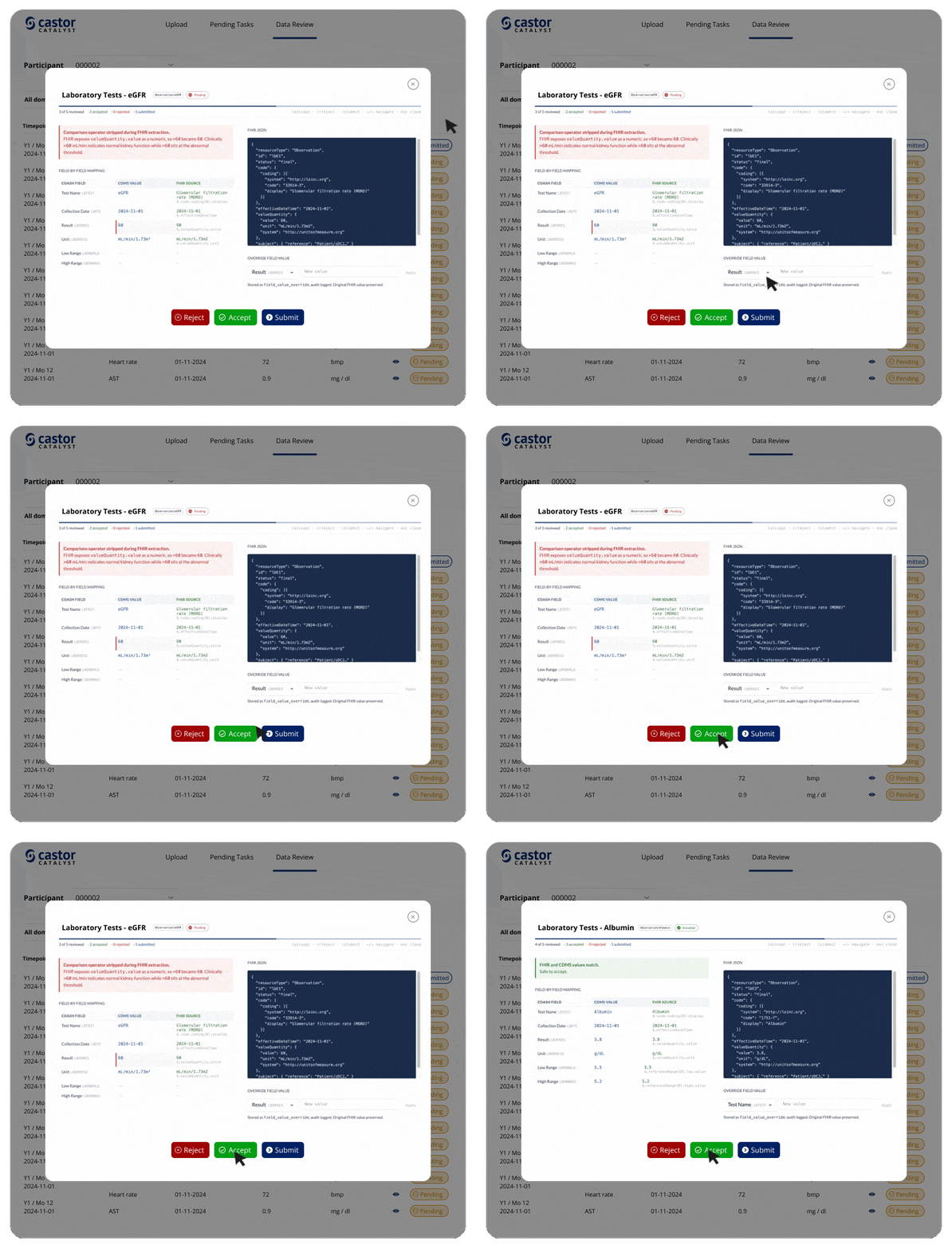
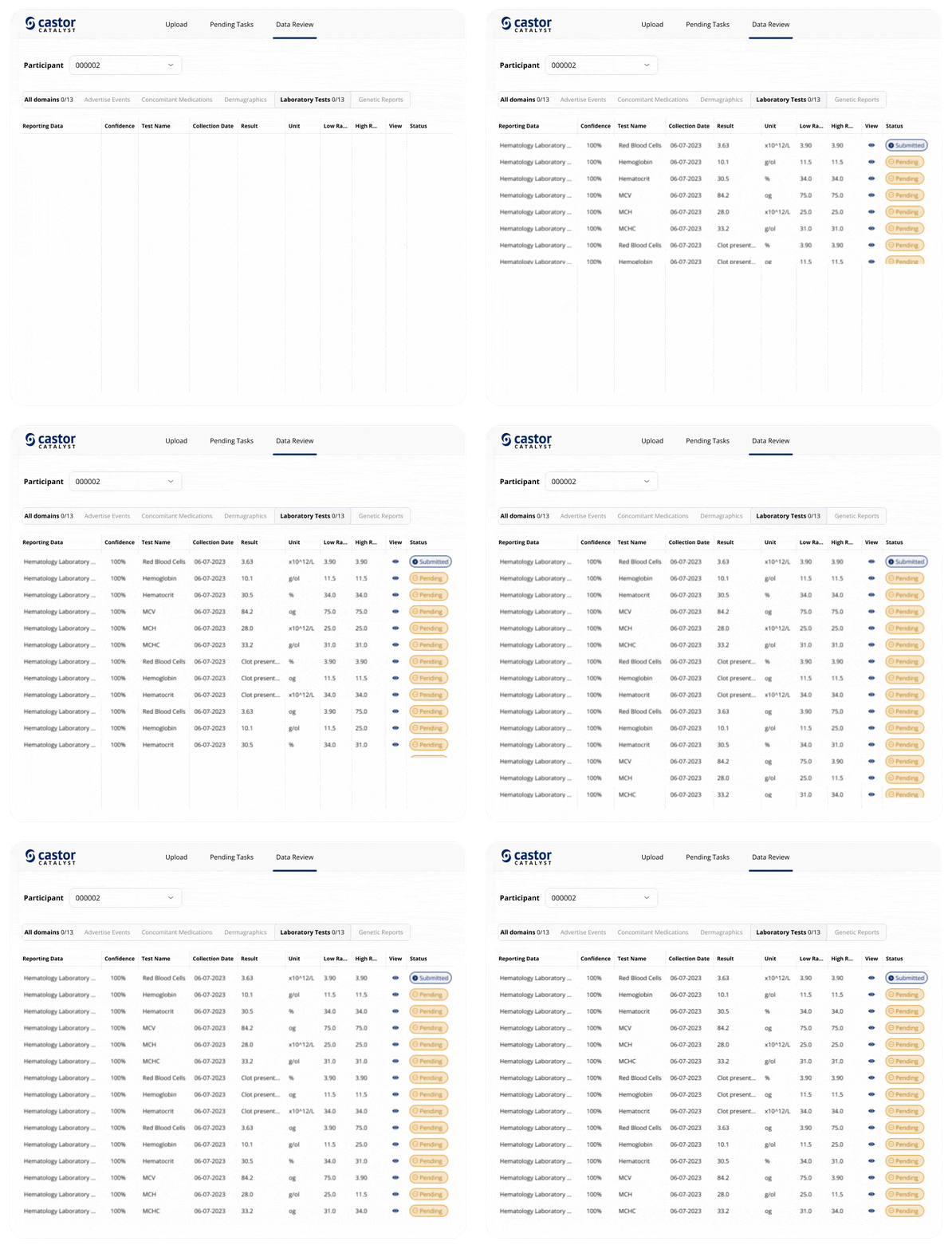
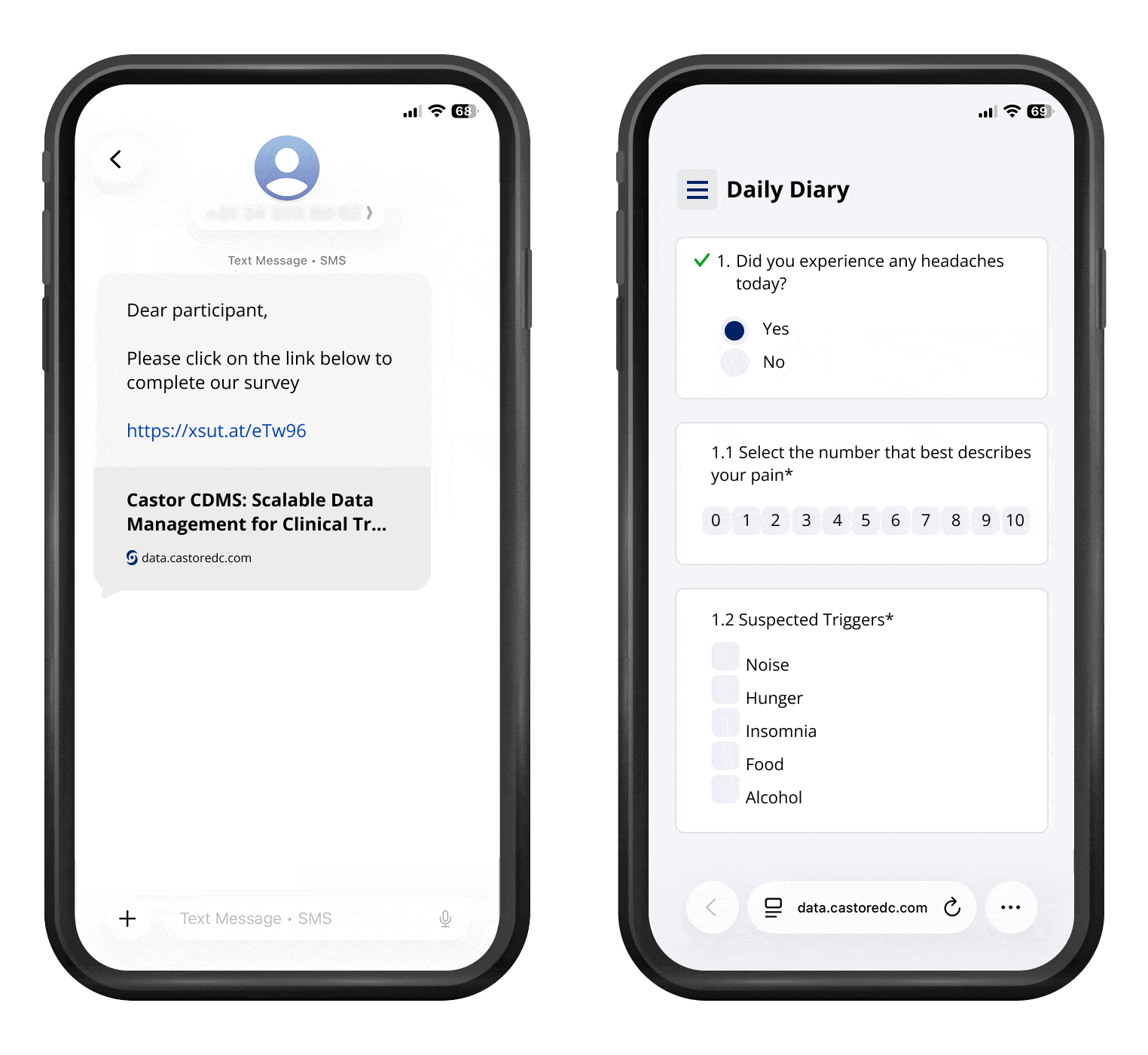
Castor Catalyst turns clinical source data into structured data. In the Direct-to-Patient workflow, the participant retrieves their own clinical records through HIPAA release or FHIR. Catalyst extracts the data, a human reviewer accepts it, and the result is clean records.
Task automation can also trigger payments, the next visit, or the first ePRO.
Choose your retrieval pathway
More than one way to get participant data.
Direct-to-Patient routes through whichever pathway fits the study: a HIPAA release workflow, a Patient Right of Access (FHIR) workflow, or API integrations.
HIPAA Release
Participant signs a HIPAA release in e-consent
Catalyst routes the request to the participant’s provider
Provider returns the complete record, including unstructured documents (PDFs, imaging reports)
Best for deep phenotypic data or complex endpoints (oncology progression, adverse event timelines)
~2 weeksComplete record depthAudit trail to source
FHIR record retrieval (Patient Right of Access)
Participant is matched to the facilities and providers they have visited, through TEFCA. If the provider’s EHR requires it, the participant logs into the EHR and authorizes Castor to retrieve the data
Catalyst pulls structured USCDI data through the FHIR API
Best for longitudinal registries and well-defined structured fields
Minutes to 24 hrsStructured USCDILower participant burden
API integrations
Direct API connections into EHR systems, plus device and wearable integrations
Best when the same systems recur across a sponsor’s research program and a stable integration is worth the setup
Most studies use a mix. FHIR for fast longitudinal data on routine fields. HIPAA release for depth where the protocol calls for unstructured documents or complex endpoints. API integrations for sponsor research programs where the same EHR vendors recur across studies.
Add participant-reported data. Pair retrieval with Castor ePRO: BYOD capture on participant devices, a validated instrument library (EQ-5D, FACT-G, SF-36, PROMIS, and 190+ more), real-time compliance monitoring, and multilingual support.
Why Direct-to-Patient
Faster timelines. Cleaner data. Lower cost.
Speed
Accelerated timelines
By using patient-mediated FHIR connections, you bypass the biggest bottleneck in observational research: waiting on busy site staff. Instead of relying on coordinators to manually dig through charts and transcribe information, data flows instantly from the EMR to your platform the moment the participant consents. This parallel processing can cut weeks, or even months, off the data collection phase of your trial.
Accuracy
Pristine, verifiable data quality
Manual chart abstraction is notoriously prone to human error. A direct FHIR pipeline pulls the exact, unmodified structured data directly from the clinical source. This completely eliminates manual data entry errors in the EDC and practically removes the need for costly and time-consuming Source Data Verification (SDV), because the data in your platform is the source data.
Cost
Radical cost reduction and scalability
When you remove the physical site from the data-entry equation, you eliminate the heavy costs that come with it. You are no longer paying for site initiation overhead, coordinator abstraction hours, or on-site monitoring visits. You can scale up recruitment, even across geographically dispersed participant populations, without a proportional spike in your budget.
21 CFR Part 11
EU MDR
HIPAA Right of Access
FDA 2024 RWD Guidance
FHIR R4
CDISC CDASH
FHIR R4
21st Century Cures Act
Where Direct-to-Patient fits
Four study types and one use case where this workflow earns its place.
Study type
Prospective registries
Participants enroll directly. Catalyst pulls records on the study’s schedule of assessments. Already in production for GLP-1, oncology, and rare disease registries.
Study type
Natural history studies
Especially for ultra-rare diseases where the population is dispersed and site-based recruitment is impractical.
Study type
External control arms
Targeted retrieval for sponsors who know the participant profile they need to match against an interventional arm.
Study type
Post-market surveillance
Long-tail observational data without the cost of standing up multi-site infrastructure. PASS and PMR studies.
Use Case
Screening and screen-to-enroll
Pre-enrollment record retrieval to confirm inclusion and exclusion criteria before participants are activated into a trial. Catalyst reads each chart against the criteria and surfaces who qualifies.
Case study, anonymized GLP-1 registry
What 'self-driving' looks like in production.
In a prospective GLP-1 registry running on the Castor platform, participants enroll on a study landing page, complete pre-screening, e-consent, and authorize FHIR-mediated retrieval of their EHR. Catalyst pulls the records, extracts the data, and lands it in the EDC.
The traditional version of this workflow takes around 40 hours of manual abstraction effort. On Catalyst, automated retrieval and extraction bring that under 4 hours.
< 1 hour
1
Enrolls on the study page
2
Completes e-consent
3
Authorizes FHIR retrieval
4
Catalyst retrieves and extracts
5
Data lands in the EDC
Enrollment to records in the EDC
FAQ
What others asked.
What is the Direct-to-Patient workflow?
Castor Catalyst’s Direct-to-Patient workflow retrieves clinical records straight from a participant’s electronic health record system without requiring a site upload. After the participant enrolls and consents, Catalyst pulls their records through one of three pathways. HIPAA Release Authorization routes the request to the participant’s healthcare provider and returns the complete record, including unstructured documents, in roughly two weeks. FHIR API retrieval lets the participant log into a portal like MyChart and returns structured USCDI data in minutes to 24 hours. Direct API integration connects to EHR vendors including Epic, Cerner, and Athena for studies running across recurring sponsor sites.
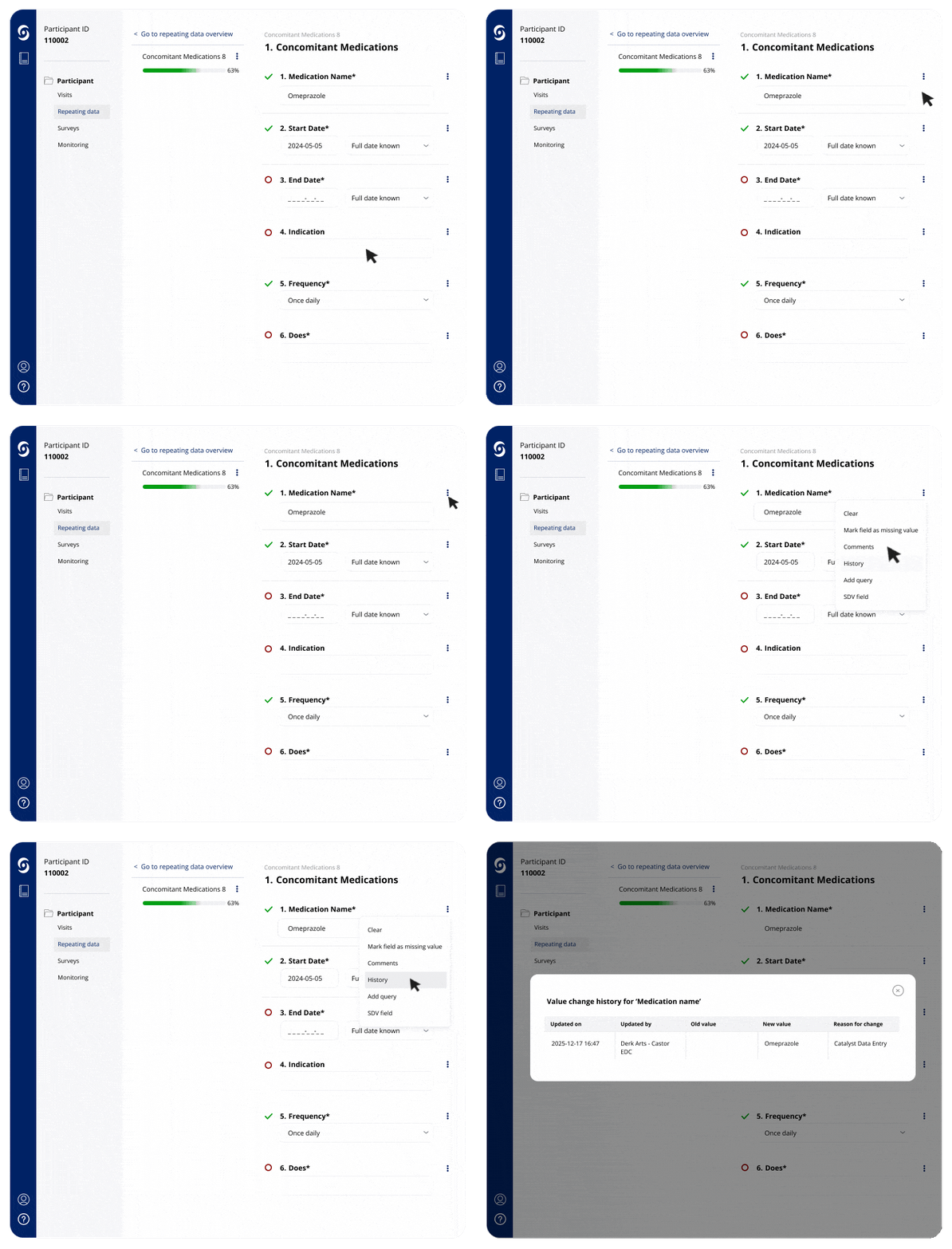
The retrieved data flows through Catalyst’s AI extraction pipeline, gets mapped to CDISC CDASH standards, passes Human-in-the-Loop review by medically trained Castor staff, and lands in your Castor EDC with a Visual Audit Trail back to every source.
Direct-to-Patient is available in the US market. For global studies or studies where sites need to contribute source documents directly, see the Site Upload workflow. Studies that mix US and non-US sites can run both side by side with one combined audit trail.
How does Catalyst access a participant's medical records?
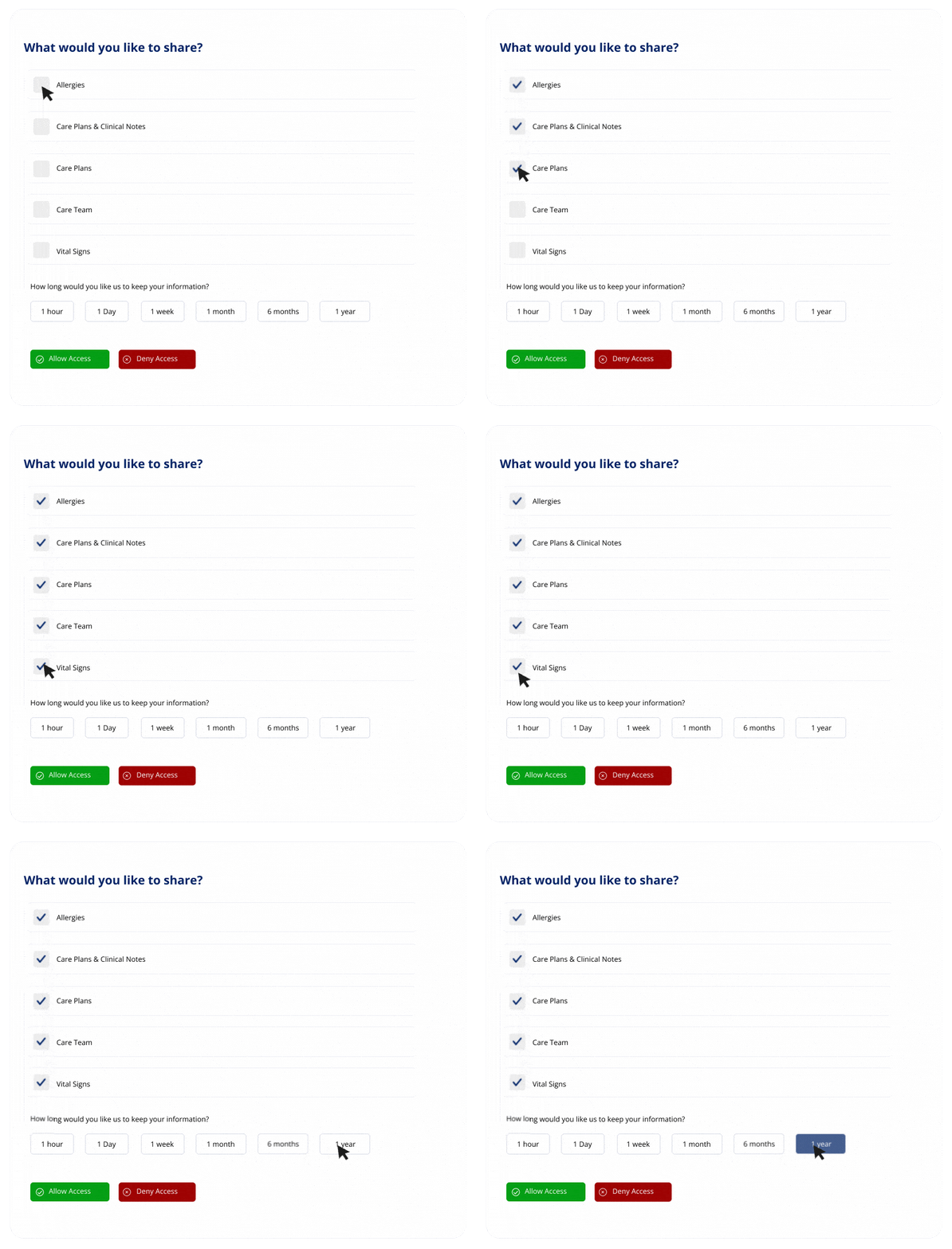
The participant does. After enrolling and consenting, the participant either signs a HIPAA release (Catalyst routes the request to their provider) or logs into their EHR portal and authorizes FHIR access. Sites don’t pull records on Catalyst’s behalf. The participant retains control.
How does Catalyst handle AI hallucinations?
Through the mandatory Visual Audit Trail. Every extracted data point links back to its source location. A bounding box on a PDF. A FHIR resource ID for structured data. No value reaches the EDC until a reviewer confirms it against the source, so a hallucinated value cannot pass review unchecked.
Explore the rest of Catalyst
Looking for a different way in?
Catalyst is one product with two entry points. If Direct-to-Patient isn’t quite the right fit for your study, here’s where to go next.
Catalyst overview
The about Catalyst page
AI source-data extraction for clinical trials. The technology overview, both workflows, and the story in one place.