Technology Approaches To Patient Enrollment In Decentralized Clinical Trials
Experts from Castor and Trialbee discuss how technology improves patient recruitment, eConsent, and data capture in hybrid and decentralized clinical trials.
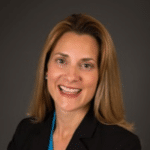 Kimberly TablemanChief Clinical Development Officer, Castor
 Martin KilsgårdHead of Product, Trialbee
- Kimberly TablemanChief Clinical Development Officer, Castor
- Martin KilsgårdHead of Product, Trialbee
About this webinar
In this on-demand webinar, leaders from Castor and Trialbee examine how digital technologies remove traditional barriers to patient recruitment, eConsent, and data capture in hybrid and decentralized clinical trials. Built for clinical operations professionals, trial sponsors, and researchers looking to expand patient access and reduce site burden, the discussion covers practical steps for adopting decentralized methods at the study design stage. The speakers share how combining audience modeling and online prequalification with eConsent, mobile patient-reported outcomes, and wearable device integrations creates a consistent experience from initial outreach through study completion. They also address data standardization using HL7 FHIR, regulatory perspectives on eSource, and ways to reach diverse and rare-disease populations.
Key takeaways
- Decentralized trials are not an all-or-nothing proposition; hybrid models bridge traditional physical site visits with remote home health procedures to give patients flexibility and choice.
- Effective eConsent goes beyond digitizing paper forms by pairing televideo consultations and identity verification with interactive explanations and comprehension quizzes.
- Connecting recruitment and prequalification tools with eConsent, direct data capture, and wearables creates a continuous digital experience that reduces site screening burden.
- In the COVID-RED study, combining remote prescreening, healthcare professional eConsent consultations, and home wearable bracelets enabled the enrollment of 17,842 patients in 15 weeks.
- Handling the influx of passive wearable data, non-CRF data, and electronic health records requires a clear underlying data model such as HL7 FHIR.
- Applying predictive analytics and feeding lower-funnel enrollment insights back into digital outreach helps sponsors refine patient personas and enroll more diverse cohorts.
Full transcript
Ryan Muse: Well, good day to everyone joining us and welcome to today's Xtalks webinar. Today's talk is entitled Technology Approaches to Improve Patient Enrollment in Decentralized Clinical Trials. My name is Ryan Muse and I'll be your Xtalks host for today. Today's webinar will run for approximately 60 minutes and this presentation includes a Q&A session with our speakers. Now, the webinar is designed to be interactive and webinars work best when you're involved, so please feel free to submit your your comments and questions for our speakers throughout the presentation using the questions chat box and we'll try to attend to your questions during the Q&A session. This chat box is located in the control panel which is on the right-hand side of your screen.
And if you require any assistance along the way, you can contact me at any time by sending a message using the same chat panel. At this time, know that all participants are in listen-only mode and please note that the event will be recorded and made available for streaming on xtalks.com. At this point, I'd like to thank Castor who developed the content for this presentation. Castor is a leading provider of decentralized and hybrid clinical trial solutions to democratize research. With the highest rated eClinical platform for decentralized and hybrid clinical trials, Castor's plug and play platform offers rapid deployment at scale, enabling researchers to create a trial in a matter of clicks with easy enrollment, consent, and real-world data capture.
Now, I would like to introduce our speakers for today's event. Mårten has worked within software development and digital transformation for almost 15 years. He has held various leadership positions within digital project management and has been has a proven track record as a key strategist, coach, and innovator. Mårten has broad experience from large, global organizations, as well as small startups. Kimberly is chief clinical development officer at Castor. She has more than 23 years of experience in clinical development and technology. Over the past decade, she has focused on applying digital health technologies to reimagine the patient journey.
She has most recently was most recently CEO at Medicine X and co-founder at Rabble Health where she led the development and beta launch of a patient engagement platform to serve oncology patients. And Maggie brings 25 years experience in patient recruitment and engagement solutions to Trialbee in a variety of roles spanning business development, strategy, and implementation of global patient recruitment programs. Over the years, Maggie has contributed to the evolution of addressing patient recruitment strategies within big pharma, CROs, agencies, as well as SaaS providers. But without further ado, let's just go ahead and hand it over to our moderator for today's event, Maggie Adamski. You may begin when you're ready.
Maggie Adamski: Great. Thank you, Ryan. Good day, everyone. I'm Maggie Adamski. I am pleased to be here today as moderator for today's session on technology approaches to patient enrollment in decentralized clinical trials. If you go to the next slide, I'm very excited to be joined by Kimberly and Mårten to discuss their insights and experience. And just to set the stage a little bit, if we think about decentralized trials and what we're learning about them, and how they're working is that there's a world of opportunities opening up. For one, it's just made it so much more streamlined in the ability to collect patient data. Secondly, it's certainly supported by the nature of the trial setup, sites' ability to free up resources at the site level.
And the most important factor is around the patient, the ability for patients to learn more about trials and to fit into a clinical trial that fits in their own patient journey. So we'd like to spend the next hour from our speakers to talk a little bit about how we can leverage technology to overcome those traditional roadblocks that we have seen in the consent, enrollment, and clinical trial conduct. We're going to talk a little bit about leveraging technology to expand access to clinical research, be able to increase transparency to the enrollment process, thereby allowing us to reduce costs and show efficiencies, and also reducing site burden by providing them with data and real-time analytics to help them improve the journey from patient enrollment to consent.
So with that, I'm going to turn it over to Kimberly to give some background.
Kimberly: All right. Thanks so much, Maggie. So happy to be here with you and Mårten today. If we can move to the next slide, I just want to talk a little bit about the decentralized clinical trial journey. Probably about seven years ago now, I was head of digital clinical trials at GSK, and at that time, we were talking about virtual clinical trials, and it really felt like it was an all or nothing proposition. And what we've seen over the last several years is that it's actually not an all or nothing business proposition, rather it's about providing flexibility and choice for patients. And with COVID, we actually saw the advent of being pushed more into the decentralized clinical trial model.
One of the things I'm really proud that Castor does is create a bridge between what I would call traditional trials where you're collecting data at a site, the patient has to go to the site. Those of us that have been in the industry for a long time know that that can be very burdensome for patients. It depends on how far the patient lives from the site. There have been situations where a patient has to travel quite some distance to get to a physical location. With the advent of decentralized clinical trials, the patient now has the option to participate at home, especially for those types of procedures that are more straightforward. It works in their schedule.
They have a home health nurse that comes to their their home and is able to conduct procedures and collect data, which was not historically able to do. We were not able to do that historically when we talk about kind of more that traditional model. And so when we talk about the bridge between traditional trials and decentralized trials, it is enabling the site to collect data at the physical location, as well as enabling home health providers to be able to collect data and and enable kind of doing those those procedures at home as well.
So we have seen this shift into what I call the hybrid decentralized model, where you have a study, sometimes the patient's going to a physical location, sometimes the patient is actually doing a remote home visit. So it's not that all or nothing proposition that I think we once thought it was, and I think there will continue to be a shift in movement towards fully decentralized trials, but likely not for all therapeutic areas. So there will still be therapeutic areas that do not lend themselves to a fully decentralized trials or I rather I should say a fully decentralized trials such as oncology. That is a therapeutic area where you will probably still see site visits where the the patient needs to go to a physical location.
If we move to the next slide. So when we talk a little bit about the power of decentralized clinical trial, it is the ability to capture data via mobile apps, so being able to collect again those patient-reported outcomes where a patient can be in their home setting. In addition, eConsent is a huge component of being able to power and enable decentralized clinical trials.
So again, it's this idea that we're moving away from hard copy paper and wet signature, if you will, and moving more towards a model of being able to consent via an app and putting all of the safeguards in place to ensure that a person is who they say they are, and ensuring that they also have a full understanding of what they are signing off on and what they're signing up for. That is an equally important component of eConsent. So again, it's not about sending an electronic document to someone and hoping that they read it.
It's actually putting those safeguards and measures in place to ensure that they are reading it, and then you check for understanding, that they do understand what they have signed off on. So that's critically important. And then also wearables, so we're seeing a lot more passive data collection, which inherently introduces some additional challenges within the clinical trial framework, so you you have all this passive data collection coming in via a Fitbit, or an Apple Watch, or whatever device it is that you're choosing to to utilize.
But there is clear signals within that data, so it's not necessarily that you want to capture and collect every single piece of of passive data that a person is getting on or about themselves, but rather identifying those signals particularly as they might relate to clinical research. So again, when we think about the benefits for patients: less travel, fewer site visits, we also see an increased access to trials for people that might have historically not had access to clinical trials, and that is good for everyone including just overall the industry to ensure we have that diversity and inclusion, and and trials, again, that represent that that real patient population. And for companies, we do see improvement in recruitment rates.
So you have a 50 to 65% increase in the actual recruitment rates themselves, so acceleration. Think that kind of acceleration, so it took two years to recruit the patient population historically. We've seen instances where that's cut in by 75% in some of the COVID trials, so it's a pretty significant accelerator. And we also see an increase in patient retention, so the less burdensome the trial is on the patient, the more likely they are to stay engaged and participate in the trial. And then also, we just see overall cost reduction of about 25% with the power of decentralized clinical trials.
So there's quite a value proposition within the industry for moving towards decentralized clinical trials, and I will say if you are not ready to go fully decentralized as I mentioned before, it's good just to even step a toe in the water and think about what trials might lend themselves to to eConsent versus maybe some of your other trials, and again, you can dip your toe in the water in that way. If we move to the next slide. So again, so happy to be here today with Maggie and Mårten from Trialbee and we are available to answer questions across the continuum here.
So just wanted to kind of highlight that Trialbee and the reason we do a partnership with Trialbee from a Castor perspective is Trialbee has the Trialbee Hive which provides audience modeling, participant recruitment, and then also goes through that prescreening process. So again, when you think about participant qualification, Trialbee provides online prequal, nurse interviews, real-time analytics as part of their Trialbee Honey solution.
And then for Castor, we come in and provide the eConsent solution, the data capture, again, I mentioned the the bridging of traditional EDC which Castor has with direct data capture which Castor also has, which allows us to provide kind of that hybrid decentralized model that we've been talking about, and then we also provide the patient-reported outcomes technology as well as integration, API integration with wearables and devices. So we are very excited to be here with you today and happy to answer any questions that you have as we move along. We have some some pre-populated questions as part of a panel discussion, and then we will open it up to take any questions from the audience as well.
And Maggie, I think it's back over to you.
Maggie Adamski: Yeah. Thank you, Kimberly, for that great introduction. We've we're talking about the expanded use of technology. It really taken off during COVID, but even with all of these advances, we have to think about the behaviors, the patient behaviors and the whole that's a that's a process that really needs to be turned around. So even in the advent of that, and we start to normalize and people are starting to come together, what would you say to those that argue that you need to bring that clinical trial back to the physical locations of an investigator? And in reality, knowing even some of the limitations you shared earlier, do we really expect clinical trials to really go siteless?
Kimberly: Yeah, and I think, Maggie, it it depends, again, on the therapeutic area and it also depends on the on the design of the study. So one of the things that I always say is if you're thinking about deploying decentralized kind of methods or models into your study, that needs to be considered at study design, and just think through how could you incorporate some of those components. And I would argue, at least in the short-term, trying for a flexible-type model where perhaps you do have some physical site visits still as part of the trial and you also offer and enable those remote visits.
So I I really do think based on everything I've seen over the last few years that dipping the toe in the water, starting to see the benefits and then beginning to also understand what works best for you as an organization or as a sponsor organization, I think you'll learn a lot just by taking that that one first step, and then you'll decide if there are trials that lend themselves towards more fully decentralized models or less within your total portfolio of studies that you're managing.
Maggie Adamski: Yeah, I appreciate that, Kimberly, because certainly I think everyone on this call would agree that as an industry, we have historically been risk-adverse, and we try an innovation here and there, but then to really go full-blown and have that as part of the DNA of clinical research is is a bit of a challenge for sure. And so I appreciate the idea that we should be really dipping the toe in the water and then really seeing the outcome and the experiences that the patients and the sites have. Mårten, do you have anything you'd like to add with regards to the whole idea of going siteless?
Mårten: Yeah. Thank thanks, Maggie. I would have a little bit of a different take on it also, and instead, ask, what makes the patients happy? As Kimberly touched upon, it's a known fact that the key to successful clinical trial is removing obstacles to participate, and it was so fitting to to to show that the leaky pipe flow chart as that is is 20 plus years old, but still valid today. And slow enrollment and and drop out will never be solved without happy patients. And with that said, polls and and and and and studies are showing that the the biggest benefits with DCTs are patient convenience and retention. In other words, it actually addresses exactly the problems that we showed.
And on top of that, decentralized trials opens up this larger patient populations that we also discussed as geographical locations gets less important, which in terms also makes it easier to enroll a diverse cohort, so. And this would be especially impactful maybe when dealing with rare disease, which is also a top topic these days, because, as the name implies, there the disease is rare and and and there are a limited number of patients to to to reach out to, and many of them would would also have a hard time traveling to site or adhere to this strict study schedule and would would therefore benefit greatly from conducting the study on their own terms.
So so to answer the question regarding trials being truly siteless, I think that is already been proven that the technology exists to support supporting the setup we we can achieve, so now it's just a matter of using what we have learned to make patients happy, and also make it easier for everybody, regardless of condition or social status or geographical location, to participate in clinical research.
Maggie Adamski: Now, that's a very, very good points there. Thank you for that, Mårten. And if we move on to another question that I had in mind is we know that as we've been talking about this is that decentralized trials can are are opening up advantages for patients and making them more interested because it's becoming more convenient for them. And it makes, removes some of those barriers, as you both have discussed. But beyond the travel that you can reduce and the need to be on-site for multiple hours and the strain that that puts patients through, what other types of engagements are you seeing are actually keeping patients involved? In other words, you're still dealing with human behaviors, that that historical patient-doctor relationship, and now you're introducing more of a virtual. What are you finding you're able to overcome those challenges with engagement tools?
Kimberly: Yeah, I think, Maggie, the the interesting thing is most of us are familiar with the technology and the tools that we have available as consumers. So when you're able to order your groceries online and have them delivered, right, so à la Instacart. When you are able to have your laundry picked up at your house via an app, and somebody does it and brings it back to you folded, right, à la HappyNest, and there's probably other services.
When you're able to order a meal from your favorite restaurant and have it delivered to your home à la DoorDash or order a car to come and pick you up and take you to the airport, the reality is that as consumers, which is all of us, right, and when we talk about patients, patients are us, right? That's all of us. It's people, it's the human experience. And so having access to all of these technologies in our personal lives and and and having these experiences now at this point, people are just coming to expect it, right?
That I mean, if I participate in a clinical trial, I can tell you this, I would want to be able to pick when I want to go to a site, if I want to go to a site, if I want to do a remote visit. And again, I go back to that idea of flexibility and choice, and I think Mårten highlighted it beautifully in response to the last question, as well as, what do patients want? What do people want? And they want to have the ability to do these things. So I don't think people generally speaking are out there advocating for trials that require all site visits, right, to be conducted at a physical location. I think that patients/people want that flexibility.
And if we give it to them, they're going to participate. We saw with the COVID-RED study we were able to enroll, I think it was 17,842 patients in 15 weeks. That's unheard of. And so people just said, "Wow, well, if I can do it, I can prescreen right from the comfort of my own home, and I can identify at least early on whether I meet the the inclusion/exclusion criteria, and then they still are talking to a healthcare professional as they go through that eConsent process, and then in that specific study, we sent a bracelet that actually went to their home that they had to wear, that took their temperature, etc.
But we saw much higher engagement in that study than you would see I think with traditional methods. So I I think that it's going to be more a pull as we continue to move forward versus a push. Like in other words, I think historically as sponsors, we felt like we were pushing technology on people. I think now we're going to see people and patients pulling and kind of demanding this type of flexibility.
Maggie Adamski: Great. I think the way you've described that is is so spot-on in terms of the fact that patients are also consumers, and we want to fit these trials that fit their the way they the way they conduct business and and activities in their daily lives. So I want to step back to the consent process and ask you a little bit, Mårten, in terms of how we can see more access and about the consenting process because it's still one of the biggest areas we've seen in traditional trials around the providing information to a patient, having them comprehend this, and making a very important decision to participate in a clinical trial. If you could maybe expand a little bit more around how technology has been able to help in engage and improve that consent process.
Mårten: Yes, absolutely, and I I I just want to echo everything that Kimberly says. It was a great tea up, of course. So so it all speaks back also to this notion of of of of happy patients, and and looking at that patient engagement, I I strongly believe that that is something that needs to be fostered and cared for from day one. In other words, already during patient recruitment, the the patient needs to feel involved and empowered and and and and informed. It is too late to address these problems at the beginning of the study or or even when you start seeing people dropping off during the study. It's it's something that needs to be started already during recruitment.
And here DCTs can provide a great advantages in in enabling this seamless patient experience all the way from the recruitment to enrollment, to to participation, because the same tools and interfaces can be used throughout the journey. And that creates a sense of familiarity and and and confidence for the patient. And then feeding that into the the the eConsent, I I think Kimberly touched upon it, and that is so true. It's not just digitizing a a manual process, because that is what what have you won. What we want to do is greatly increase the experience through the use of the technologies like like multimedia or or or graphics or whatever it may be to to make the patient feel truly informed and and empowered.
And on top of that, throughout not just eConsent, but maybe throughout the study, we can also in a DCT setup make available more frequent communication between site staff and and patients. Instead of relying with synchronous interactions with with a phone call or a face-to-face meeting, we can have more asynchronous alternatives like text and chat, so so that can be used more on on-demand from the patient, but without overburdening the sites. And that is really important during a a consent process when you might have many questions, and you you feel that, "I don't want to call, I don't want to make make a fuss," but sending a text or a chat that someone answers at their convenience is is a better alternative.
Maggie Adamski: So I think you both have really demonstrated that technology can really be integrated into the way patients respond to information, look for information, and and get involved in trials. So I think that that's a a really important point that you both mentioned. So let's think about if we look at to the next slide, there's another area that's really opened up here when we think, and Kimberly, you brought this up earlier about the collection of all of this different data, and we're thinking about with the Fitbits and so forth.
There's more data than ever before, which is there's an advantage to that, but then there's also it's overwhelming in terms of determining what's the appropriate data, what do you need, what is of value, and the same in turn with real-world data, that we have access to so much of this, but what do you do with that and how do you actually make that work for you in terms of recruitment? So in looking at all this patient data, and all that needs to be analyzed and processed or processed and analyzed, what challenges do you see this posing for researchers and for those who are working in technology?
And and what do we need to factor in in terms of the design of DCTs to handle this unanticipated and now new influx of data?
Kimberly: Yeah, I think, Maggie, the most important part of the data explosion is having a very clear data model that underpins all the data. So we are moving from a a history of doing collecting what I would call case report form data, right? That's that's how we have historically collected data in the context of a clinical trial, and then we would create databases based on on the case report form. And the reality is there is so much data outside of the case report form now that needs to be collected.
So whether it's just generally non-CRF related data, if it's that passive data that we talked about with wearables and devices, and then one of the other things that we're working on is EHR data and that reusability versus continuing to do dual data entry between the EHR and the EDC.
And again, I would argue that having a solid data model underpinning all that, I like to advocate for HL7 FHIR data model, because it's already utilized in the in the EHR space, and so for the other kind of 20% of data that we collect in the context of a clinical trial, I think that we can figure that out from an extensibility perspective, and and there are really smart people working on that right now with the Project Vulcan project that's ongoing as well.
So and I do feel that that's critically important because I hear people talk a lot about artificial intelligence and machine learning and things of that nature, and the reality is you can't do any of that without standardized data that can be aggregated together where you can gather those insights and then train the machine, for lack of a better term. So so I think that's probably mission number one or job number one for all of us in the industry, is kind of just sort that out.
Maggie Adamski: Now, I appreciate that. That's a very good points. And even with all this data, when we look we take a step back and from Mårten, your perspective, from a recruitment perspective and the advent of all of this data, how are we seeing leveraging that data to support the process for enrollment?
Mårten: Yes. So so in terms of of patient recruitment, access to additional data is almost never a bad thing, I shouldn't say never, because, because it of course need to be verified, compliant, and and and secure, but access to different types of data enable us to do much more predictive analytics when setting up recruitment this recruitment effort. So long before even starting, we can have a feel for for the size and the geographical distribution of of the the the cohort that we that we then need to enroll.
It's also enabled us to create more precise and and accurate patient personas to be used when we do the outreach, whatever outreach it may be, it can be digital, it can be be through databases, or or whatever. And by using knowing exactly who to target, and here medical data can then be enriched with with what we would call maybe consumer data to really get a a 360-degree view of the candidates we are looking for. And and one can even determine the the likelihood of of certain individuals being open to to participate in clinical trials, because, as we all know, less than 1% of patients that are eligible actually participate.
So data can be used throughout the the recruitment effort, and moving into maybe the enrollment, then it it can be used to better triage potential candidates to ensure that only the highly eligible patients make it to the site screening process, and thereby reducing the enrollment burden for the sites.
Maggie Adamski: And just in terms of along those lines, when we get to the point of consent in terms of the experience around using technology to improve the consent process for a patient, and Kimberly mentioned some great examples, and curious, Mårten, from your perspective, as far as designing the content for consent, if you had any thoughts around what what our audience can do to improve that.
Mårten: Well, as you said, Kimberly had a a great summary. I think that the best solution is again where where you have a patient-centric approach and and and and really first foremost try to achieve making the patients feel truly informed before signing. And and it can be done with everything. We have even included small quizzes, for example, where you can have a enrollment or or or consent phase and you read all the material, and then you have a little bit of a just a quiz to see have you understood the things. And it's both for your own sake and for the the treating physician. And then, as I touched upon it, I think the communication is really, really important. You need to have a either be able to set up a a face-to-face video consultation or have a a two-way chat in order to to highlight things that you are unsure of. So I think that is it's two very, very important features.
Maggie Adamski: That's great, and certainly with the use of questions as patients move toward consent so to we understand if they comprehend or they have any questions, I would imagine that using the data that comes from that can provide you with some good insights into where patients may be falling out of the process or where they might not truly understand what's expected of them so that you can make adjustments in that communication or even rethink the trial design. So very good, very good. So I'd like to ask you from your perspective and starting out with a polling question so that our audience can get involved here. I'd like to ask all of you, has your organization begun to explore solutions for conducting patient enrollment in a decentralized clinical trial? And I'm going to turn it over to Ryan who's going to give you some instructions.
Ryan Muse: Well, yes, thank you so much. So as you've heard, we've got a poll question on everyone's screen right now. You can all participate by selecting on any of the three options you see in front of you, and then clicking submit. And as Maggie said, the question that we have for you asks, "Has your organization begun to explore solutions for conducting patient enrollment in a decentralized clinical trial?" Your answer options are yes, no, or I don't know. We'll give everyone a few seconds to consider your answer. We appreciate you taking the time to consider how this best applies to yourself or your organization, and we'll take a look at your results in just a moment. It looks like most of you have submitted an answer, so thank you very much. Let's take a look at your results and they should be up on the screen right now for you.
Maggie Adamski: Well, this is a fantastic information here. So it's wonderful that we've got a lot of people on the call that are already starting to assess how to enroll patients for decentralized trial, and but there's still some questions around that, and and so this is really still uncharted territory and we're learning a lot as we go along in terms of what's the appropriate way to engage and enroll patients in a trial. So thank you for providing your insights, everyone. We've got quite a few who have quite a bit of experience on on our call today.
So with that, I'd like to turn back to our presenters and ask you, given experience that we're having today, and knowing all the historical pitfalls that we've had in the whole consenting enrollment process in the patient journey, how do you both see the patient enrollment process improving over the next 10, 20, 30 years? And what will patient enrollment look like? How does that how does that work, how and and how many do you think will actually start taking part in trials, knowing historically the low numbers? So I'd like to turn it over to you, Mårten, to see what your thoughts are over the future of trial enrollment.
Mårten: Excellent. Thanks, Maggie. So so I see a couple of trends that I believe will be instrumental in in driving change in in in our industry, and we have touched upon some of them, so that is good, that is not only me who who thinks in those ways. But the first one being what we call medical interoperability. What I mean by that is is access to medical records and patient history in a standardized way. Kimberly touched upon it when when going into this AI and and and and also machine learning.
So this will of course always require the patient to consent, but after getting that consent, it should be much easier to get access to to medical information and use it as part of the enrollment process. The second trend I see or or I believe will will will be growing moving forward is crowdsourcing or the the the term of of of crowdsourcing, and here I believe the future of patient enrollment lies in the ability to seamlessly utilize different patient sources that then would feed into one common platform or or infrastructure, and thereby still maintaining a centralized place for for for sites and sponsors to log in.
In such a setup, I believe that each source could play to its own strengths, because there are a lot of ways to to to to recruit patients, but nobody can do it all. So may it be that you're you're specialized in digital marketing or you have access maybe to patient information, or perhaps even you're an advocacy group with with members that are willing to participate, all of those could feed into this centralized platform and doing what they do best, and then the platform handles everything from a site to a sponsor perspective. And lastly, I just want to mention something that is probably some people are going to roll their eyes, because it's always there, but what this big data and analytics.
And and and I truly believe that that that is is the future, and we have already touched upon the vast amount of data available out there and and how it can be used during the enrollment process. So my prediction is that that trend will grow and that the analytics capabilities will become more sophisticated, both in terms of predicting an outcome, but also enabling an adaptive strategy during recruitment and during enrollments.
Maggie Adamski: Great. Thank you, Mårten. And Kimberly, what are your thoughts along those lines?
Kimberly: I think, yeah, similarly to Mårten, I think we'll see an increase in the number of people that are associated with registries or communities, for lack of a better term, that identify with a certain community group. So like for me, I suffer from migraines, so I would have a community in that space and there may be the opportunity to learn about clinical trials that way. I think we talk a lot about just clinical trials as another care option.
And so, again, in the same in the same way, if I go to my primary care physician who clearly knows that I suffer from migraines, that that individual, primary care provider would be bringing up the opportunity or options of clinical research and, again, kind of those experimental medicines, so at least I have an option, right? So I expect to see that more. And the other thing I like to advocate for that hasn't really quite happened yet is this idea that as an industry, we just make clinical trials more accessible by having one way to find them. So there's ClinicalTrials.gov.
We all talk about that's not the the most effective or user-friendly way to identify or find a clinical trial that you may be interested in participating in, and so I think as an industry we need to figure that out. As a patient, it is not a great experience to have to go to each individual sponsor site to do find a trial, right? It's more we want to have that at our fingertips that we can just find a clinical trial near us for the specific indication that we are looking for. So I expect all those things will continue to happen as we move into the future. And again, just with that aim of making it easier for people to participate in clinical research.
Maggie Adamski: Thank you for that, for both of you. I mean, this is a very exciting times. We've spent years and years dealing with the same challenges of getting patients into clinical trials, lack of access to information, not going where they are, or making it a trial that's convenient and fits with their lifestyle. And you've both provided some very optimistic views that I think we're going to see for all of us on the call, increased opportunities and probably better enrollment over the next several years to come. So I really appreciate all of your insights there, and and before we move on to see what the audience has to say, I'd just like to ask if either of you or both of you have any final thoughts when it comes to technology and improving the process for enrollment. No? All right. Well, if you think of something, we'll come back. Mårten?
Mårten: I can I can just echo what you said, Maggie, that it's it's really exciting times for our our industry, and and and and turning COVID or whatever into something positive, and seeing all all of the things that evolved from there. And and I truly believe we're on the right path of making clinical research research more available for the patients and more predictable for sponsors, so benefiting both parts really.
Maggie Adamski: Great. Well put, well put. So with that, I'd like to open it up to our audience. If you have any questions, we'll take a look at the chat to see if you've if you will type in your questions using the chat box at the bottom of the control panel on the right side of your screen. We'll give you an opportunity to to provide your questions. And and also if in the interest of time, if we're unable to get to everyone's questions, we will be following up with you following the the conference. So everybody everybody will have an opportunity to get the insights. So with that, I'm going to take a look and see what we've got in our questions so far.
So the first one we have is, can you talk a little more about what measures are taken on the eConsent process to ensure the participant is reading the material, be able to ask questions, and ensure that the actual participant conducting the is the the patient who's conducting the eConsent process and not someone else? So I'd like to open that up to both of you, actually.
Kimberly: Yeah, I think Mårten touched on this one earlier, so I'll just take a quick quick stab at it. But for us, we we ensure that the patient's actually having a conversation with a real healthcare provider, right? So we send out a an email link. It's very easy to use, and then the the patient's able to open it and they're able to actually see the healthcare provider, in addition to walk through the document, so they can see the healthcare provider and they can see the document. We are actually in the process of ensuring that if there is any areas of ambiguity, you can highlight that, that can be flagged, so that we're clear if there's any issues there.
As Mårten mentioned, we also facilitate quizzes at the end, so we can send out a short survey after, just to make sure that they they have understood. And in terms of that privacy and identification, today, what we do is you do have to show a driver's license to the or some sort of ID to the healthcare provider demonstrating that, yes, that's, in fact, you, and that is how they do that today via the televideo visit. So we do have a number of different mechanisms. And again, what I want to highlight there is compare and contrast that to some idea that we we just ship off an electronic document and expect that people are going to read it.
That's not the approach, and I don't really think anyone in the industry advocates for that approach because we all know even for us, if we end up clicking on stuff and we can't we can't be in that position when we're talking about clinical research. We need to ensure that there truly is that deeper level of of understanding, and not just kind of a click-through.
Maggie Adamski: Yeah. No, that's good. A good point. Mårten, I don't know if you want to add anything, just leading up to that, because I think the whole idea of making sure that there's comprehension along the way, and you certainly highlighted this early on, is making sure that patients have information to make an informed decision to get to the point of consent, anything that you might want to add from a technology perspective?
Mårten: Just a small thing, and and this is something Kimberly has touched upon it multiple times also, what what what is the what is the expectations these days of of of our users, and and simple things, like like some of sometimes these documents can can be a little bit cumbersome to go through, and we have the the medical illiteracy problem of some people. And and just incorporating small things, like maybe be able to hover over a certain word that you don't understand, and you can get a little bit explanation, or even toggle between different and and get a more, how should I say, it should still make you you you informed, but can be a in a simpler language enabled to really catch those people that that that maybe read, but not fully understand.
Maggie Adamski: Great. Great. Thank you for that. So we have another question that's come in. Currently, at-home services for clinical process are subpar. What is being done to enhance this experience from the sponsor side? So, for example, high turnover rate for nurses, so training is an issue, mishandling of blood samples, etc. Kimberly, you want to take a stab at that?
Kimberly: Yeah, I mean, I advocate for partnerships in this space. So Castor has a partnership with Lightship who is one vendor, there are many, that stand up kind of these home health services. So I I think you do want to think about how you're establishing those those home health care services, and possibly leveraging a vendor who is experienced, if you will, in setting up what I would call a virtual site without a physical location. So that would be my advice. From a Castor perspective, those aren't services that we provide, so, again, we provide the technology framework and and infrastructure that underpins clinical research. But I do think it's it's it's going to be something that we have to continue to watch as we move forward, and I think we'll continue to see new entrants in that space, as well.
Maggie Adamski: Great. Great. Good point. What another question that's come up is, what is the FDA's view on use of decentralized trials for primary endpoints and secondary endpoints in a trial? Kimberly, is that something you might be able to address?
Kimberly: Yeah, I mean, I think that they've provided some initial guidance on what I would call eSource, and and what I would argue, and so again you have kind of primary endpoints and secondary endpoints within that data, and one of the discussions that we have frequently is the level of data cleaning and and data quality. And and I've been in our advocating for moving kind of the data quality components in earlier on. So if there's anything in the data that doesn't look correct, we should know that really at the point of entry. So just going back to this idea of eSource and primary endpoints, secondary endpoints, I think the the bottom line is the fidelity of the data has to be incredibly high.
But I think, overall, we are seeing support from the FDA. I mean, even the fact that they've drafted guidance, early guidance on utilizing these approaches signals that there is a willingness and an openness to to these approaches, and, in fact, in some respects being encouraged in that direction.
Maggie Adamski: Great. Great. Thank you for that. So we have another question that's come up. Does introducing, I think this is really a good one for you, Mårten, to address. Does introducing data science and technology in patient matching and enrollment lead to better qualified enrolled patients?
Mårten: Yes, would be my my short answer, absolutely. We have touched upon it and and and how access to data and and applying data science can can can be used to to to both predict and and get an a more of an adaptive enrollment process. And one basic example, even though I don't want to to go into this with everything with data or machine learning and AI, but a very basic way of using data in a in a recruitment funnel is really upstream the the findings from the lower end of the funnel to the top end of the funnel.
And what I mean with that is if you find out that someone some characteristics of the patients that you might might have overseen are really important for getting enrolled to a trial, that is super good to upstream up to to to your your digital outreach or whatever you you have whatever brand type of of of communication you need, and then adapt according to what kind of patients are really getting enrolled.
And and also in in terms of we touched upon the diversity, you can also have a close look on on on both what type of outreach could enroll a certain a certain demographic, but also make sure that you have a diverse cohort, and see that, okay, now we we we we are lacking this type of patient, let's adjust our outreach to try to find more of those.
Maggie Adamski: Great. Great. Very good, very good. So I have another one that's interesting, and I know as we're coming up to the end, do you have any stories from patients who've been able to take part in clinical trials thanks to DCTs? And how have expanded enrollment processes helped them? So from either one of you, like first to hand it to Kimberly, who's been certainly in the DCT space a long time now, if you've had any anecdotal stories for the audience.
Kimberly: I think one patient that I've heard from, Jennifer Ardor actually, she's within our industry as well, but she she's talked about a clinical trial that she did probably 10 years back and the experience going through that clinical trial versus more recently participating in a clinical trial that provided more of these options to her, and just that essentially what we already believe to be true is true, which is the more flexibility that we provide people and that we fit within their lives. So again, it's this idea that we're not making participation burdensome on them, but rather making it easy to to to fit it into their lives, they're much more likely to participate, and that was definitely true for Jen. So I think anecdotally what we believe to be true is certainly the feedback that we hear back from patients as well.
Maggie Adamski: Great. Great. I would imagine too that because we have the ability now with technology and an ease of communication with patients, that this ultimately at the end of a trial would allow for a more robust feedback loop so that you could start to get some feedback directly from patients who've participated, what their experiences have been, and and learn from those. Would you would you both agree that that has a place here?
Kimberly: Yeah, absolutely.
Mårten: Yes.
Maggie Adamski: Great. Great. So I'm just take one more look. We've got time for one more question. And I think that, let's see, I want to make sure I haven't missed anything at this time. So, oh, and one final question as we finish up. I just see here for, what kind of patient populations can you capture in a decentralized clinical trial that were previously difficult to observe?
Kimberly: I think it goes back to the therapeutic area question, but certainly we've seen decentralized clinical trials in the cardiovascular space, respiratory space, dermatology space, so I would say those are three therapeutic areas that I've seen leveraging the decentralized clinical trial method.
Maggie Adamski: Right, right. And from a recruitment standpoint, Mårten, is it it may be early to tell as more and more trials are underway if we are seeing an a change in attitude or anything in our recruitment process as far as interest level and and response rate to a decentralized trial.
Mårten: Yes. One example that we have seen would be mental illness and having a little bit of depression. Those patients can be more implied to answer to to to text messages or written communication, and also having more of an asynchronous communication, because it can be really cumbersome when when a call comes up or whatever, and and and rather that that that the facing that, dropping off. So we have seen those kinds of technologies work very well with with with mental illness.
Maggie Adamski: And that certainly is one that we find is most difficult population to engage in, so that's that's wonderful news. So I think at this point and this has been a very engaging and exciting conversation, I could spend all afternoon with both of you. I'd like to conclude that that's going to be our final question, and if we have no other questions coming in from the audience, I'm just going to a one more for a moment here, just to open it up for any final thoughts from either of you at this point? Well, I think you did an excellent job of covering the questions that the team had, so I'm going to turn it back over to Ryan to finish the conclusion, but on behalf of the team here, I'd like to thank you all for your participation in this discussion today.
Ryan Muse: Yes, thank you all very much for that very insightful presentation. As we've reached the end of our time here today, but before you go, I'd like to draw the audience's attention to the handouts module within the GoToWebinar control panel, where they'll find some additional material related to today's presentation to download for some future reading. I want to thank you all for participating in the webinar, as if we couldn't attend to your questions, the team at Castor will follow up with you. You will be receiving a follow-up email from Xtalks with access to the recorded archive for this event. A survey window will be popping up on your screen as you exit and your participation is appreciated, as it will help us to improve our webinars.
And I'm going to send you a link in the chat box, and with this link, you'll be able to view the recording of this event on this page and you can also share this link with your colleagues when they register for the recording here as well. So I encourage you to do that. Now, please join me once more in thanking our speakers for their wonderful time here today. We hope you all found the webinar informative. Have a great day, everyone, and thanks for coming.