Discussion Topics/Learning Topics:



About this webinar
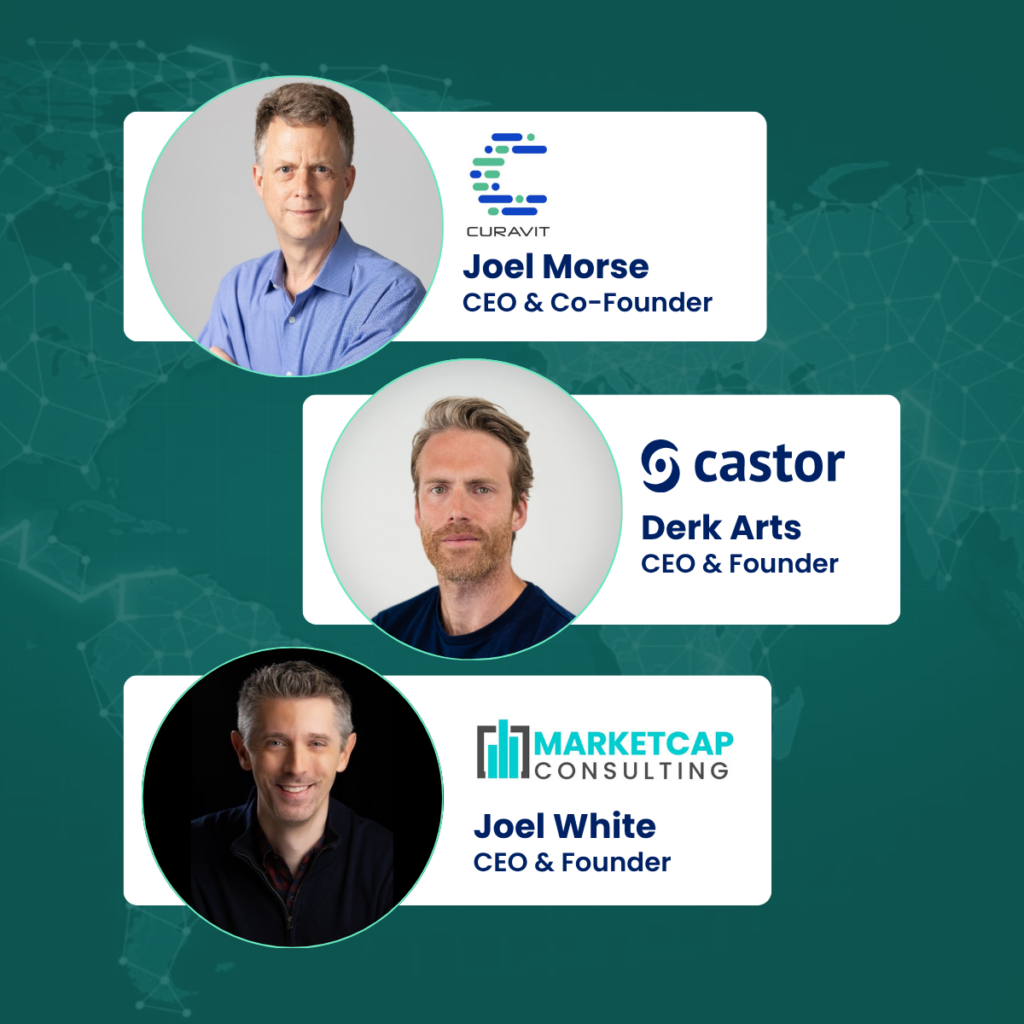
In this on-demand webinar, Aaron Berger (United BioSource), Ryan Moog (Datavant), and Derk Arts (Castor) join moderator Kristen Harnack to discuss how tokenization and patient-centric technologies support real-world evidence studies. Designed for clinical development leaders, trial sponsors, and research operations teams, the session explains how tokenization creates one-way, encrypted patient identifiers from personal information such as name, date of birth, and Social Security number. The panel examines practical applications, including linking prospective clinical trial data with EHR, claims, pharmacy, and mortality datasets while preserving patient privacy. They also discuss integrating tokenization into eConsent workflows, deduplicating patients across rare disease registries, extending post-approval follow-up periods, and addressing FDA expectations around data provenance, matching precision, and upfront research plans.
Key takeaways
- Tokenization converts patient identifiers like name, date of birth, and home address into one-way encrypted locators, allowing sponsors to link prospective EDC and ePRO data with secondary EHR, claims, and mortality sources without exposing patient identities.
- Capturing personal identifiers during the eConsent workflow houses sensitive data separately from the clinical database and spares research sites from adopting an additional software platform.
- Generating multiple tokens per patient improves matching precision across real-world data sources that hold different combinations of identifiable information behind their firewalls.
- Sponsors use tokenization to attach passive long-term extension studies to pre-registrational trials, deduplicate patients across rare disease registries, and investigate screen failures or patients lost to follow-up.
- For regulatory submissions such as oncology label expansions, the FDA expects upfront agreement on the research plan at the Type C meeting stage, clear data provenance, and high precision in token matching.
Full transcript
Kristen Harnack: Okay. Looks like we have quite a few folks that have already joined us, so we'll go ahead and kick off our webinar today. We have a very exciting group of folks here on the call. So welcome to our panel on the role of patient-centric technologies and tokenization in real world evidence studies. My name is Kristen Harnack, and I will be the moderator for this discussion, and I'm joined today by several of my esteemed colleagues in the industry, Aaron Berger of United BioSource, Ryan Moog from Datavant, and Derk Arts of Castor. So thank you all for for joining us today for this conversation.
While the adoption of tokenization has been on the rise, to many the term is still a bit of a black box, so today we hope to shed some light on the topic, sharing real experiences and advice for anyone who is considering exploring this path. We'll be taking questions throughout the throughout the session and also at the end of the panel time permitting, so please feel free to post any questions that you have within the Q&A feature, and we'll be answering some of those live with the panelists as well as answering some within the chat, just depending on the nature of the questions. So please feel free to make this an engaging conversation and get your questions out there that that you'd like to have answered.
So with all that being said, we will go ahead and start with a quick round of introductions. So today we will start with Aaron. How about we'll start with you? Aaron, UBC is a leader in the area of RWE. Would love to hear a bit a little bit more about yourself as well as some of the work that UBC is doing.
Aaron Berger: Great. Thanks so much, Kristen, and thanks everyone for joining us today. Aaron Berger here. I lead our late stage research and real-world evidence offerings at UBC. The purpose of our group is to help our clients answer important questions about the safety and effectiveness of their treatments. This is often to meet regulatory requirements or expand market access, drive a publication strategy, most importantly, help improve to help improve patient outcomes. So you asked about and and we're talking here today about our interest and proactivity around tokenization. And so this ties to a central theme that drives the development of of our offering for our clients to meet those purposes, and that is modernizing study design and data acquisition.
And for a long time we've known that there's a better way to collect the data that we need to answer those important questions than simply having health care providers keystroke data into EDC and gather it from the fragmented health care landscape. We now have at our disposal patient-centric and patient-facing technologies, like like that from Castor, that allow us to tokenize and once we tokenize, we can now access vast repositories of real-world data and bring them into studies in a in a in a much more efficient way than we ever could before. So that's why we're excited about this this technology and and tokenization discussion today.
Kristen Harnack: Awesome. Thank you, Aaron. And Ryan, at Datavant, I assume you probably live and breathe tokenization. Would you like to tell us a little bit about yourself and about Datavant's approach to to tokenization?
Ryan Moog: Absolutely. Thanks, thanks, Kristen. Well, so I'm Ryan Moog. I lead clinical trials at Datavant. Datavant is a company that was really founded to enable connectivity in a privacy preserving way across real-world data sources, patient-consented records, as well as clinical trial data. You know, I actually came from a Datavant client myself. I was really inspired by the mission to enable that connectivity and to always have patient privacy at the heart. So, obviously, as you enrich data with the universe of real-world data, so EHR data, claims data, vaccine data, pharmacy data, etc., you get to some really precise data sets.
And so part of our mission is not only to enable that connectivity, but also to ensure that at the end of the day, the data sources that sponsors are holding are are ensuring patient privacy throughout. And it's really again, central to our mission. The trials charge specifically at Datavant, then, is to enable now that we've spent the last several years tokenizing this world of real-world data that's available, especially here in the US, we now have over 600 data sources.
In the trials landscape, particularly, our mission is really to ensure that we can support sponsors in creating those patient tokens for for trial patients as they enroll, that then enables and unlocks this world of possibilities of being able to compare prospectively collected clinical trial data with with data from from the universe of real-world data. So it's it's a really exciting mission, and and it's a great time to be having this conversation with other experts.
Kristen Harnack: Thank you, Ryan. And Derk, you've often speak about interoperability. Would you give us a little bit of your background as well as Castor's vision for interoperability and tokenization?
Derk Arts: Yeah, of course. Thanks, Kristen. Really excited to talk about this subject today. I think people that know me or have seen some of my my posts know that I care deeply about maximizing the impact of research data, and so really extending the human healthspan for as long as possible with, honestly, as little data as possible, as in fewer trials, less patient burden in the world. And I think that what we're talking about today really plays into that because we're talking about often using datasets that already exist or are already being gathered for other purposes and and using those to generate extremely valuable insights that are usually more applicable to a real-world setting than a very rigid clinical trial.
And also just creating the opportunity of datasets that are generated during the clinical trial process for those to really have a lot more impact, long-term impact. And something as simple as tokenization at the beginning of any project and and really just taking that into account can really help maximize that long-term impact of some of these datasets. Because what I've been arguing for the probably the past 10 years is that we are basically wasting data. We are not running master protocol trials, so we're not really running trials efficiently across therapeutic areas, so you know, each pharma company, each country, each academic center is running their own trials. We're not really reusing data often.
When a project is done, the data gets archived and stowed away somewhere, never to be seen again. And if we then need information that we could actually get from that dataset, we forget that that data set ever existed and we just start a new project. And so any initiative that I think can contribute to sort of a a global sense of the richness of the data we already have and how we could further enrich that and you know maybe can use the dataset that was captured 5 years ago for another 5 years, so we continue to get intelligence and information from that data for for 10 years before we potentially retire it, I think, is going to make an incredible difference.
So and I think RWE and more patient-centered technologies and obviously tokenization are all critical elements in in doing a better job there. So as you can tell, it's definitely a topic I'm very very passionate about.
Kristen Harnack: Thank you. Thank you all for those introductions. We do already have a question, which is actually aligned with our first topic of the day, which is, what exactly is tokenization? So the question from the audience was, can it be explained like you were talking to a fifth grader? I'd love to hear a little bit, Ryan, I saw you come off mute, if you want to start by giving us an overview of what tokenization actually is and maybe framed in a real-world example type scenario.
Ryan Moog: Yeah, absolutely. And I probably should have started there anyway. So a great way to explain tokenization, I can't take credit for this analogy. It was a a client of ours that had to go explain tokenization to 190 sites, and so he came up with this. Reach out to me afterwards, I'll get you in contact with him if you have any marketing needs. So he came up with this analogy. Basically, tokenization, think of it as like a patient identifier smoothie. So we use a universe of patient identifiers, things like first name, last name, date of birth, Social Security number, home address.
And we essentially, think of each one of those elements as a piece of frozen fruit you might put into a smoothie, and then the tokenization process is actually hitting the blender on that smoothie. So all of those pieces are still inside of the smoothie, but you can never get them back out. So a token is a one-way, cryptographically-certified, encrypted, hashed identifier, for lack of a better term, or a patient locator, if you will, that is essentially It's like 42 characters long. We actually generate multiple tokens for each and every patient.
I won't get too much into the weeds of that, but just know that there's not some universal token that, you know, every time you enter all of Kristen's data in, you get the exact same token back. So we do that so we can enable different levels of precision of matching across different data sources. So step one is generating those tokens, so creating that smoothie. And step two is actually getting real-world data sources to adopt that same technology and that same infrastructure, because if everyone's on a different token system, then it's impossible to bring them all together.
So that's really what Datavant's pure play mission has been, is to enable that connectivity layer, so we enable the creation of those tokens, those those smoothies, if you will, for all those different data sources for all the many of the the name-brand real-world data sources, claim sources, EHR, and mortality, etc., that that you might be working with today. We do that same thing in the trial space.
And then ultimately, then, you as a sponsor can come back at the end of the study and say, "Here's all of the data we prospectively captured in an EDC system for this patient, and we can link that at a patient level." The last piece of the puzzle here is, and I'm kind of getting off of the fifth-grader explanation, but it's a key piece of it is, at the end of the day, when a sponsor says, "Hey, here's my EDC data, and maybe here's some ePRO or eCOA data, and then we also want to pull in mortality data, be able to observe whether or not patients survived past five years from a real-world data source," ultimately, that all gets combined and then certified by a statistical expert to ensure that once you merge all those different data sources together, that you're not inadvertently unveiling specific patient details or making it really easy to re-identify patients.
So But Datavant is a is a pure play connectivity layer. We don't have our own data, and that's part of the reason why we've been able to work so effectively with the industry, and really act as a as an industry switchboard, if you will, to enable that connectivity, and then obviously then working with the the eClinical players out there to ensure that tokens can be really easily generated for for sites. It should be a a really straightforward, seamless thing for sites.
Kristen Harnack: Aaron, to kind of build off of that, what are some examples of where you have implemented tokens and what are the benefits that you are getting from using tokens in your in your studies?
Aaron Berger: Sure. So to build off, you know, a theme that Derk mentioned earlier, less burden, fewer trials, you know, maximize the impact of trials already being conducted. So a a great example of this would be the ability to take a a trial that, you know, in a classic sense, traditionally before these technologies came came along, you had a a start to the trial, you enrolled patients, patients were in the study for a certain amount of time, and then they they exit the the study.
And and now, you can think about a world in which, if you consent the patients properly, either upfront or along the way if you do a new consent, and if you tokenize that patient, we can now put on a long-term extension study on on the back end of that, and we can continue to follow that patient. And and perhaps we originally did this in our study was in a pre-registrational setting, and now we're in a post-approval setting, and we may have post-marketing requirements that regulators are asking to understand more about the safety and effectiveness once the drug is out in the real world, once patients are using it for long periods of time.
And so we can use that same study and that same pool of patients and continue following them in in a passive in a very efficient sense. You know, we're not setting up a brand-new study. We aren't signing up health care providers to go enroll their patients. We aren't collecting their data through manual harvest of of charts. We're we're using tokenization, we're using access to to to data, secondary data sources, claims data sources, and and we're bringing that data in for years into the future. So so that's one example of of a use case.
I'd say a second one would be helping to understand and and acquire data on a patient's health care journey that may be occurring outside the setting of care where that patient enrolled in the study. So if we're in a trial and that patient is enrolled in a trial at at at one particular health care setting, you know, there may be other things happening in that patient's care journey outside that setting, and it's sometimes inefficient for them to for for the site to have to go out and gather that data, and sometimes they aren't able to gather all that data.
But when we tokenize, we have a very efficient solution for understanding other medications that the patient is taking, other health care encounters that they're that that are occurring, and we're creating a more enriched dataset on on that patient. So so those those are two top ones that come to mind initially.
Kristen Harnack: We do have another question that came came through the chat here. Does this mean that the patient can have multiple tokens? So can one patient have multiple tokens?
Ryan Moog: The short answer is yes. And the reason for that is that different real-world data sources have different levels of PII behind their firewall. We're not talking about the de-identified versions that they commercialize, we're talking about what they're holding upstream of that. And so not every real-world data source has Social Security number, for example, that you might have the opportunity to ask a patient for that in the setting, in the context of a clinical trial. So we generate multiple tokens. To be very clear, it's the same work effort for a site and for a study to generate one token or 50 tokens.
We actually encourage sponsors to generate as many as possible because that opens up the door down the road to link to other types of data sources. And ultimately, as you think about submitting data from this combined real-world data and prospective clinical trial entity of the data you're collecting, and you think about supporting assessments with payers or sharing that information with regulators, the questions they're going to ask are really around precision of the matching between that because again, we're not never at no point in time do we know that it's Kristen Harnack over here and Kristen Harnack over here. We know them by the tokens. And so that precision of matching is really really critical.
That's why we have multiple tokens, to open up as many doors as possible to matching, and and also, in many cases, actually match on multiple tokens. So if you know that a patient matches on what Datavant would call token 1 and token 2, you have a really high degree of of of precision in that match to ensure you know that a patient is a patient across datasets.
Derk Arts: These are these are both, I think, very interesting points. And I think what's what I think is important to realize is that in the end, and correct me if I'm wrong because I'm not the expert here, but we often use a pretty similar set of of PII from the patient to generate these tokens. And so the beauty is you only need to capture that once. And Aaron already alluded to it that eConsent is actually an amazing way to do that because I think often the question would become, well, where does this PII come from to generate the token from, right? Because in a in a clinical dataset, we wouldn't necessarily want to or we would wouldn't want to have any sort of identifiable information.
And I think the the beauty of an eConsent workflow is that you actually have separation there. And so what we have always told our customers on our eConsent platform is to consider using the functionality that we build into the into the solution to capture that information from the patient. So you go a little bit further, you go a little bit beyond just asking for their first and last name and email address, for example, and you push into maybe five more data points that will allow you to generate the vast majority of tokens that you could think of. And, of course, you get them to consent to leveraging that information to generate tokens to enrich the data.
So it's it's kind of two birds with one stone in in that regard. And I think it's a very natural workflow. If you think about how do we fit this in, I think it works really well hand-in-hand with eConsent because you actually have a moment where a patient is manually entering details about themselves that you may want to not have in any other dataset that comes up in that clinical trial. Is that is that something you often see or do you see, how do you typically see these tokens being generated, Aaron or Ryan?
Ryan Moog: I can start, Derk, and Aaron, if you have any other perspective, chime in here. Derk, I would say I'm in total lockstep with with your your thought process there. We typically partner with eConsent and EDC vendors to generate those tokens, because it was funny, a couple members of our of our team were recently at an investigator kick-off, and it was just really re-educational for us of just about how much is being asked of sites.
They get dozens of different platforms put in front of them, and so if we can reduce that number by one by piggybacking on what an eConsent vendor is already doing, that is absolutely a great place for us to be, and and also really simplifies any any implementation that we have to go do. It's a it's a single implementation of Datavant technology behind the firewall of an eConsent vendor versus rolling out technology to each individual site. We certainly we can do that, we we have done that in some cases. And another way to think about this is we can take a little bit of a heterogeneous approach to how we approach different sites.
So some sites may say, "We want to we don't want to participate in eConsent," or, "We want to generate tokens on our site." We certainly can can enable that, but if there can be a monolithic answer for an individual study, that's certainly the most efficient path.
Aaron Berger: Yeah, I would add that once the decision has been made, okay, we we understand the benefits of tokenizing our patients and we want to access these ecosystems of vast secondary real-world data, then we really spend a lot of time thinking about, okay, what is the experience for the patient and the and the site going to be, and what are the steps necessary and what kind of technology are they going to have to interact with? And sites and patients have to interact with with lots of different technology. Sites have EDCs, and they may have eTMFs and things like that that we're asking them to use. And then patients have, now we're we're using eConsent in most studies.
So it's really important to us, and this is why we've we've partnered with Castor on a few occasions, that that that technology solution is is coherent. We can sleep at night knowing that we can have a turn-key eConsent and collection of the necessary pieces of PII that are needed for tokenization. And so and we know that that data is going to be housed separately and it's going to comply with all of the privacy considerations, and it's it's going to be something separate from our our clinical database.
So that is fundamental to any study design, and and deploying something like that that is efficient for sites and patients to use and interact with is is really the first step in in going down the journey of enriching your dataset with tokenization and secondary data.
Kristen Harnack: Amazing. We've had a ton of a ton of questions come through the chat that I want to ask a couple here. Specifically related to trial recruitment, would you be able to share how you're using tokenization or how it can support during the trial recruitment phase?
Aaron Berger: Well, you know,
Kristen Harnack: If you're seeing it for trial, yeah. Go ahead.
Aaron Berger: Yeah. You know, the idea that that that tokens now exist and that we are able to perform analysis of de-identified data is is helpful in terms of informing a site selection strategy and pointing us to to where patients exist. Now, the whole concept of of the token, and maybe Ryan, you know, you may have other use cases in mind, but the purpose of the token is to protect a patient's identity. So, you know, we don't use any of that to to to execute a direct-to-patient recruitment campaign.
However, when we execute a direct-to-patient recruitment campaign, and we're either trying to enroll patients directly into sites in a decentralized model, or maybe we are triaging patients to sites, and we have a number of ways that we can seek to identify patients through patient advocacy groups, through through digital channels and whatnot, once the patient elects to join the study and they sign informed consent, and they contribute the the PII in the secure environment that's needed, then we apply the token, and then we are able to to match them up with with secondary claims sources. So maybe that answered the question. But Ryan, did you want to add anything to that?
Ryan Moog: You're you're spot on, Aaron. The only other thing I would share is while it's not a point-in-time solution to to patient recruitment just because of that re-identified nature of what you're typically looking to do in a recruitment setting, what we have absolutely seen tokenization do to help inform activities on the sponsor side or on the CRO side is to use those tokens generated to better understand patients for the next time. So for example, I'm working with a sponsor right now on helping using tokens to help explain patients who are lost to follow-up. They exited the study at a certain rate, and now we want to go back and understand, well, why did they exit the study? Why did we lose contact with them?
We're doing the same thing with another sponsor with screen failures. So the patient had originally consented to be screened for the study and then had failed out of the study, and so we want to better understand like, well, what can we learn about this situation that can help better inform designs, recruitment strategies for the future? So certainly have options to do that.
Kristen Harnack: And Derk, just to kind of add onto this this theme here, could you speak a little bit, we have a question in the chat again, could you speak a little bit to the patient control of of their data?
Derk Arts: Yeah, you know, I think that's something we all care about, but in the end hasn't been really been prioritized by the industry, unfortunately, I would say. And I think it also comes back to patient-centric technologies. In the end, the the main thing we're trying to achieve in in life sciences is finding better drugs or interventions or therapies for for patients or preventative strategies, but we're always trying to get to the answers as quickly as possible. And I think with what started in the pandemic is really a much stronger focus on something that was already important and we already had eyes on, but it's now really taking shape, is how do we actually prioritize the patient?
And alongside things like GDPR and just generally empowerment of the consumer, is a very natural thing to to see that there's demand for patients to to better understand how their data is being reused, enriched, etc., etc. And the the concept of smart contracts was brought up, and you know, I've always been slightly skeptical skeptical of sort of the explosion of blockchain applications that that sort of came after the the the third crypto wave, but I do think there is technology there, and just full disclosure, I'm more excited about large language models than than blockchain in clinical trials, but that's another webinar. There are applications in clinical trials for for sort of blockchain-esque technologies and smart contracts.
And I think one very specific one that I've always believed in is that sort of giving patients more control over over their data. So really using these technologies for them to give to give them full control and traceability over where their data is being used. And it could be as easy as just keeping, and I'm not going to details because I will say things that are wrong, but on a high level, them keeping a key that controls access to their data on a blockchain, for example. So they always know when the group requests can be made to to access that key, potentially, that they can then approve and they can also see where their data will then be used downstream.
So that's kind of how I envision this future state. Could be another 10 years, but I think at some point, we'll all have a digital identity with sort of control panel with access to keys that control access to our most precious data, so that we always know where data's going to be used. And I expect companies like Datavant to to play into that, but also companies like like Castor through our eConsent technology where you can imagine you you can also manage permissions for data that was captured in a in a Castor trial. And I'm sure Aaron shares some of these some of these views.
But we always need to balance the the need to to have timely delivery for some of these new drugs and interventions to the market with with patient perspective, and I think we're in a pretty good place now where we're trying to do that.
Kristen Harnack: Thank you, Derk. So backtracking a little bit to current state, whenever you're having conversations with sponsors about including tokenization, how receptive are you usually finding them? Is it something that they're eager to implement? Do they understand it? What's been your experience? And we can start with Aaron for this one.
Aaron Berger: Sure. You know, I would say two to three years ago, we were always starting with the conversation, I wish I had that analogy that Ryan mentioned earlier at my disposal. We've tried on a lot of different ones for size to explain tokenization. I think that's a pretty good one. But I'd say two or three years ago, we are explaining the the technology and talking about it. The awareness has grown, the adoption, we're climbing the adoption curve. Many sponsors see it as the the new standard, so particularly in in a post-approval setting, where you absolutely have the desire to efficiently and passively follow patients and collect their data.
So for for US studies, it is it's becoming part and parcel to any post-marketing and real-world evidence research. For many pre-registrational studies, it is as well because of some of the things that I mentioned earlier, where it gives you the ability to follow some of your patients who have participated in your in your clinical trials over long periods of time after that they exit your trials. It also allows you to collect data on those patients out that maybe outside the setting of the clinical research site. So it's I would say it's quickly becoming a a standard feature on on many of the studies that that that we're that we're running today.
Kristen Harnack: Ryan, do you have anything you'd like to to add to that as well?
Ryan Moog: Obviously, we have a a pretty specific view on this, but I'll tell you just anecdotally, we've seen the number of tokenized trials almost triple in the last 12 months, and the number of of sponsors who are engaging grow quite a bit as well. So I would say for us and this concept has really only been around for for 4 or 5 years in in its modern state. I typically describe it internally at Datavant that 2021 was almost our year of innovation theater. Can we make this happen? Can we can we show that linked data is is useful for specific starts of types of study designs?
2022 was really our our year of scale, where we started to see some sponsors take they they had dipped their toe in the water and tried one study and now wanted to roll this out to a a whole therapeutic area where especially in in areas where we don't have as great of understanding of the patient population that we might in others. And then 2023 has really started to been the year where we're seeing some companies actually make enterprisewide decisions and start to say, "Hey, this is a really expensive clinical program, and it's even if we don't have a planned link right now, it might even be useful as an insurance policy.
So if FDA comes back and asks for a super responder arm or for additional evidence about a super responder arm, or additional evidence about a a specific part of the cohort, we now have optionality to go explore that." So for example, the last kind of point here is, we had one client of ours took a look at all of their registrational, observational, post-Phase III studies that they were running to say, "How many of these could have been answered if we had just been able to tokenize and extend that observation period like Aaron was talking about, long-term?" It doesn't necessarily remove everything, but it could be a real efficiency. And so it's almost sometimes it's easier just to say, "Hey, we're going to tokenize everything.
We're going to standardize that consent language, standardize how that gets input into protocols, make sure our IRBs are aware of it." And that's an easier stance to take than than only using it just for studies where there's a specific linkage in mind at the outset of the study.
Aaron Berger: Yeah, and Kristen, I may mention one more use case that I think is really important that we haven't touched on yet, and I should have mentioned this earlier. Another type of program that we run at UBC is what we call integrated registries, where we're taking data from registries that are already being conducted. And so this kind of builds on Derk's theme, too, of minimizing burden, running fewer trials. Well, there are registries that are already being conducted in post-approval settings, for example, in rare diseases all over the world.
And manufacturers that bring treatments to market in this space, often times have a post-approval requirement to to conduct research once their drug is on the market, for example, in gene therapy, follow those patients for for for 15 years. It's not efficient to launch a brand-new registry to do that when these registries already exist in academia, consortia, and national registries sponsored by patient advocacy groups sometimes. So we can bring that data together from those different registries, but you know what's really important is to make sure you're deduplicating those those patients. You could have same patients participating in multiple registries.
And for this, you need tokenization to do that, so you can apply a solution like a Datavant token to all the patients from those different registries, make sure you're sorting out the duplicates, and then you have a more, pristine research data set. So that's another really important use of of tokenization technology.
Kristen Harnack: That is that is a great use case. Coming from the the EHR world, deduplication was a hot topic on all around on all the datasets that we leverage. So on on that note of kind of where we're at today, there is a question in the chat that was also my next question for you all, which is going to be from a regulatory perspective. So what are you seeing, what are you experiencing from the regulatory side of things? Are regulatory bodies okay with tokenization and with linking real-world data? What's been your experience and what's what have you seen so far? And we can start with Sorry. Go Go ahead.
Ryan Moog: I I was going to say, I'll I'll get started, but I I'd be curious to hear Aaron's thoughts on the topic here, too. What we've actually seen pretty positive signals from regulators so far. We've had sponsors already include planned tokenization and planned linkage into their evidence submission plans, and it's been positively received by regulators.
Now obviously, and there's no one-size-fits-all answer here, but depending on the study design, depending on the research question, what I would there's a lot of differences in like how they'll go process that question and that submission, but the one consistent thing that we see or the two consistent things we see, number one is they're going to be really curious about how tokens are generated and specifically around how tokens are linked to ensure high precision of matching. So that that's and that's what I would call the Datavant problem. It's it's our problem to solve in concert with our sponsors, and we've had pretty good success of being able to to explain that so far.
The other piece of this, and this is more of the real-world data vendors piece, is trying to understand more about data provenance, data auditability, history, data quality, just I would put a broad umbrella over that. So and again, depending on how you're using real-world data, that will really drive through those those questions. But I would say overall, FDA, for example, in the US has been really clear that they expect the use of real-world data across different therapeutic areas, across different study designs and modalities. And and and I find that real-world data vendors are really excited about no shock there, but really excited about the use of their data in clinical settings and so can be great partners in evaluating that.
The last thing I'll say real quick is, if anyone's not seen this, FDA, this last fall, had published a call to action, their FDA Advancing Real-World Evidence Program in the States, which is an opportunity for innovative designs to get more direct collaboration and public scrutiny around those plans. If you have not seen that, we've certainly encouraged a lot of our clients to go submit to that. FDA accepts applications, I believe, every 6 months for the next couple of years. And so if this is new to you and you want to really explore what having FDA as a seat at the table would look like, that's a great opportunity to go do that, and obviously encourage folks to look into that.
Aaron Berger: Yeah, I I would I'll I'll build from from there, Ryan. So the FDA has been embracing this this space, and starting in 2018 when they laid out their real-world evidence program framework, there was a kind of a map set forth for different guidances that would come out, and those have been been rolling out at a pretty high high velocity. And and those guidances, I'll just give a couple There are about seven of them. I'll give a couple examples just to give the audience an idea. Assessing electronic health records and claims data to support regulatory decision-making, standards for drug and biological production submissions containing real-world data. So in these and there's five or six more of them.
In these guidances, the FDA is is is telling us what they expect to see when a sponsor wants to use real-world evidence for a regulatory decision-making purpose. Most of the cases that we see are for label expansion, so the initial approval was usually a more classic study design. However, then the sponsor is seeking And most of the examples, by the way, are in in oncology, where a different indication, a different line of treatment is is being sought, and and real-world data is being used for that purpose.
A couple of main themes in that, as FDA is pretty clear about, and Ryan mentioned it, data provenance and traceability back to source, that's a really that's a theme throughout all the FDA guidances, as well as developing your research plan upfront, and submitting that in the beginning, and having a discussion around that at the type C meeting stage. What FDA does not want to see, and you see some of the examples where an attempt to, say, gain a a a line extension has failed, a label expansion has failed, is if the goalposts are are moved and the data sources are changed, and the research question is modified after the fact, after some of the real-world data comes in.
The the research plan should be submitted and agreed to in the beginning and and then the analysis from there. So so those are a couple of themes that we see from from regulators. But they're they're they're very receptive to this, and there are, you know, we're seeing in a pretty high frequency label expansions being approved based on real-world data, which rely often times on on these types of approaches and and and technologies.
Kristen Harnack: So I am curious, I know we've talked quite heavily so far focused bit more on the United States side of things. Does anyone here have experience with tokenization outside of the US and how that is being accepted or adopted in in other countries?
Aaron Berger: Well, I I probably, you know, jumped the shark with my, you know, other use case earlier, but but that would be one of the primary examples, where we're we're looking at academic consortia or patient advocacy groups or national registries in various countries, and and they're running a a registry in patients often times with with rare diseases or or chronic illness. And what we want to do is pool that data together to amplify the the insights that we can yield instead of having small pockets of data in a bunch of different sources, bringing it all together in a common dataset. In order to do that, you fundamentally you need to have patient identifiers and and tokens. So so that's the use case we see.
Now, the health care landscape, ex-US is a little bit different, and in that we don't have like we have in the US where we can go out and license a large claims dataset and and and use the tokens to link it to our patients in in our, you know, clinical trial. So so that dynamic is is different, and I'll see what Ryan, you know, might have a perspective on on that. But we certainly will use tokens to handle identity, patient identity management, it's fundamental and and it helps us do that that type of integrated registry and pooled analysis.
Ryan Moog: Yeah, Aaron, I think I think you nailed it. And I would say overall, and and actually I saw there was a I'll kind of move over to the there was a question in there Kristen about like external control arm development. It's just one example here of of the another use case for tokenization. And what I'd say there is we absolutely have supported that, and and Aaron mentioned earlier the ability to use tokenization to deduplicate across different registries, across different studies, to ensure that a patient's not in multiple arms of a study in an external control type environment is a really interesting use case.
And actually, while while we get really excited about the ability to use tokenization to to generate real-world evidence and to be able to leverage the universe of real-world data that folks have already spent the last two decades acquiring and becoming really familiar with, another really cool use case is the ability to even look across different studies to see that one one sponsor of ours is is really focused on professional clinical trial enrollees and how sometimes that's really hard to to track down as well. So the ability to to use tokenization to not necessarily generate a brand-new dataset, but to ensure the data you're already collecting is really pristine is is a great opens up that opportunity to use the data for that as well.
Kristen Harnack: All right. Moving on a little bit to some some additional case studies and really lessons learned, when we think about the case studies, the different sponsors and trials that you all have worked on, are there any success stories that you can share about some of the benefits to make it a little bit more more tangible for some of the people in the audience?
Ryan Moog: Yeah, I'll I'll start with a a quick one. So we had one sponsor that it was very public about about their their interest in claims data to help assess and extend an observation period for a patient population for a long period of time, and it was a relatively small study. So we have as you can imagine, a lot of the interest in in generating tokens and linking to real-world data are for really large studies where perhaps data collection and long periods of data collection are quite expensive, and so we we've done studies that are 25, 30,000 patients large.
But anyways, we had one sponsor, is a really small study of only 150 patients comparatively to some of those large registries, and and they were really for the purposes of statistical power, were really curious about how they could get at least 80% of patients covered with through claims data so that they could look at extended observation periods. And it was a relatively rare population, so challenge accepted.
And what we were able to find, and this is just one of the nice parts about Datavant, because we don't just have one set of data sources, we work with pretty much everybody, we were able to find with just looking at two different claims sources and being able to deduplicate between the claims sources and the prospective trial population, we're able to find claims data on almost 90% of the patient population again, just from two data sources. Now, we could have continued to add on additional one, but you can imagine there's some there's you know, limited returns once you get to 3, 4, 5 different sources of data for a single set of problems.
But I would say that that because I think some folks look at tokenization as just an opportunity for these later phase large studies, but even in smaller populations, it can be really useful and and the and I think real-world data sources have matured enough where you're finding some really good partners out there that they can help create the value, create the the the fill the data gaps you're looking to fill.
Aaron Berger: Yeah, I would say, you know, and I've already kind of referenced the example where we are Some of the success stories or case studies involve using tokenization to handle identity, patient identity management, deduplication that is enabling that type of pooled analysis that's meeting post-marketing regulatory requirements, or helping a sponsor gain market access in a new country with a with an HTA body that that has some some some data requirements for reimbursement decisions. And then, you know, the examples that all the examples that Ryan mentioned are are certainly applicable, as well.
Those are all things that are in flight right now, and the fact that we are tokenizing those patients, design our informed consents upfront at the study design stage, and setting up the right technology like like Castor's patient-facing technology in order to position ourselves to have all this optionality in in the future, these are these are and indeed start licensing and and linking data, these are these are the success stories that we're seeing right now.
Kristen Harnack: Yeah, on on that note, Aaron, of kind of the the technologies to support it, what advice would you provide to someone who's looking to go down this path of tokenization? What advice would you have for, you know, how to start that process, what to start thinking about in order to be successful?
Aaron Berger: You know, I think it starts with a a patient journey map thinking about what is the experience of the patient and the intersection with the any site participation as they are going to be maybe recruited to participate in a study, as they enroll in in that study, and what technology they interact with, and and is that technology fit for purpose? And you need to have a technology platform that is meets all the standards for 21 CFR compliance, and and and data privacy, and and that you know you don't have to think too much about, is that that it's going to do those things. It's going to collect the PII.
It's going to enable the the tokenization that you're that you're hoping to achieve, and and that it's going to be done in a way that is user friendly with the the for the patient and the site in in some cases, and makes their overall experience participating in the study a good one. So those are things that we think about a lot at the study design stage when thinking about what patient-facing technology we we need to use.
Kristen Harnack: Excellent. Derk, anything you'd like to add to that?
Derk Arts: I think I'll leave it to the experts on this on this topic.
Kristen Harnack: Okay. Ryan, anything you'd like to add?
Ryan Moog: I'm good. We can move on.
Kristen Harnack: Okay. All right. Excellent. Aaron, you did such a good job. Took the words out of everyone's mouth. Okay, so I would like to spend the last few minutes kind of talking a little bit about the future and where we see this going. We had a few questions in the chat earlier about, will real-world evidence ever be have parity with data collected in a standard clinical trial in a controlled setting? Curious to get your thoughts, starting maybe with that question of where we see, you know, this going from an adoption and a regulatory perspective. And then maybe after that we can open it a little bit more broadly to to general future future visions.
Aaron Berger: Yeah, I would say that current state is it's in most cases, it's it's viewed as as complementary. You know, and if you think about it in this way, it's a technology that is just enabling us to do something in a more efficient and optimized way that we've always wanted to do it in the first place. You know, our goal in conducting research is always to collect as much data as as we can that's that we need to answer our research question.
It was very difficult to do so historically, and it relied on manual processes, and I can think about my history as a CRA and going to sites and you have the the walls full of paper charts and you have people that are writing data into two-part NCR case report forms or even keystroking it into the EDC, which was a a step forward, but that's the way that we collected data for for many years. And we wanted to learn, we wanted to know all the medications the patient was taking and health care encounters that they they were having. We just might not have been able to to capture all of it. Well, now digitization has changed that, and interoperability technology has changed that.
So in and and so and it just allows us to collect more data that we we hadn't, you know, been able to before in a more efficient way. And this is something that regulators want want to see. We're going to get better analysis when we when we use these modernized technologies. So, so in some ways, it so it's complementary to research that we've what we've always been been doing. It is, I would say, mostly used in the setting of doing something like use building an external control arm, trying to expand the the label, supplementing the gold standard randomized controlled clinical trial. Those are that that that's the current state today.
But I think we will evolve into a future where you you will use the this infrastructure and and this tokenization, these data ecosystems like the ones Datavant's created, to to do research in a little bit different way. And that that's probably on on the horizon. What do you think about that, Ryan and and Derk?
Ryan Moog: Yeah, I totally agree with you, Aaron, and I I think one of my sincere hopes in even joining Datavant in the first place is trials are just so expensive and and importantly so, like I mean, and I don't know that real-world data will ever fully replace, especially in some study designs and some trial settings, the ability for someone to directly report on, "I am with this patient right now.
I use this specific blood pressure cuff while the patient was in this specific position." Like that that's not really a reflection of how clinical care is delivered in the real world, but I my hope is that there are a number of different types of research questions that we can answer with real-world data, especially at scale, and do so in ways that number one, minimizes the amount of patient burden and and with that, also site burden, which I think is definitely something that we're focused on. And then and number two, to be able to increase the volume of of good research that happens, that sometimes gets shut down because of budgetary concerns.
I would love to be able to help, you know, life sciences companies, academic organizations, etc., start to initiate the research projects that they had that maybe just missed the budget cut because of an overrun on a trial that happened the year before. So, I think volume of research is one thing that and simplification of activation of that research is something that we're really focused on. And the other thing, it's just kind of looking to the future and there was a a question in in the chat as well about this, going off topic of of where I just was, is is thinking about global application of of tokenization technology.
So today, tokenization and data ecosystems are pretty focused on the US, just because of the the nature of commercial data sources that have materialized in the US over the last two decades. But certainly, you know, if I were a clinical development leader at a top 10 pharma who's running a global trial, I'd really prefer that there was a global solution to this. It wasn't something I just had just my US answer, just my France answer, just my Australia answer, but a true global answer. That's something that that we're working on already. We just launched in the last month tokenization in the UK.
We anticipate that we'll have a few other countries in Europe by the end of this year, and obviously are looking at that through the lens of GDPR as well as other specific regional privacy regulations. I think tokenization in in many cases is a great fit for that. But there's not the same commercial data ecosystem in Europe, at least not in every country. So, I think use cases will drive some of that, sponsor demand will drive some of that. I think national stakeholders like the NHS in the UK are going to be be stakeholders here.
So it will develop differently than it did in the US, but on a five-year horizon, I think that's got to be our goal is how do we do this the same way globally, or at least tap into the universe of of data that are out there in in straightforward ways?
Aaron Berger: Yeah. And, you know, I'm remiss. I should have been looking at some of the the the questions in the chat. So I can address a couple of them for some folks really quickly here. You know, one of them is about how has UBC used Castor's technology in trials to make them simpler for for patients? Give it a specific example. Well, so you know, there's a specific example. We're we're recruiting patients for a prospective registry. We have a number of ways to to recruit those patients through, as I mentioned earlier, digital channels or partnering with a patient advocacy group, having it help having sites recruit recruit patients.
And once the patient understands the study and decides to participate, and by the way, this is, I'll mention another key learning and thing that's something that's really important to take into consideration, is how you design the informed consent and explain tokenization in a way that is simple and that an IRB will accept. And that's something that has to be really thought through well. But then once the patient has decided that they want to participate, we use the Castor solution for consenting that patient and for collecting the the the the PII, and from there, all the patients enrolled and we can do all these all these wonderful things. So so that's, you know, using that technology in a in a prospective setting.
Another question was about consent when you bring in registry data that I mentioned earlier, and and that's an important thing to to think about. You have to look at the informed consent that the patient signed to participate in that legacy existing registry and consider what it will allow and will not allow you to do, and sometimes it will allow you to to to use a token to assemble to to to manage deduplication or to link that patient up to a different dataset and match them and enrich the dataset. Sometimes, you may decide that that that informed consent doesn't have that particular language there and the patient may have to be reconsented.
So those are things that have to be taken into account at that at the planning stage.
Derk Arts: Nice. Kristen, maybe I could add to just sort of where do we see this going. So I think you know, right now I think we're quite happy with establishing safety and efficacy of new interventions that come to the market with the current process and randomization is going to be pretty difficult to replace just because there's so many sources of bias in any population, and you need enormous volumes of data, so you know, long-term, obviously, this may be possible, but it's not going to be an easy journey. But I do think everybody is getting more and more sort of well-informed about the applicability of some of this super rigid you know, randomized control clinical trial data.
So while I'm never well, it's going to be a long time before I say that doesn't have a place in the process, I do think we can do a lot better with understanding what is the actual impact on a human being of a certain intervention? You know, if you look at larger number needed to treat analyses, you know, the outcomes there are often quite different from what you would find from the original studies and how they're sort of being summarized in in the media. And I think it's it's going to be it's absolutely critical to to enhance that that foundational more rigid data with these these real-world insights, and I think everybody's seeing that. The patients, the patient federations, the regulatory bodies, the pharma companies.
Pharma companies also realize they will ultimately do better as a business if they develop drugs that people will want to continue to take for the next 10 years without without side effects and that are truly effective and that truly reduce mortality, that actually hopefully move the needle on all-cause mortality. Those are typically not things we can we can establish from our regular registration trials, and it is pretty crazy that some drugs are being brought to market with just that data without actually understanding what what does this actually do in the real world?
And so I think we're going to see more and more and more of these type of trials, and the impact on sort of the approval process and post-approval process is going to be bigger and bigger and bigger because it actually helps us understand what is truly moving the needle to to extend that human healthspan that we were speaking about at the beginning. So a lot to be excited about, and a lot a lot of work to still be done.
Kristen Harnack: All right. Thank you, all. This has been a fantastic conversation. We are at the end of our scheduled time. We definitely could fill another hour, I think, on this topic, so maybe we'll have to have a webinar part two. But for final thoughts before we sign off, I'd like to do just a quick round to get everyone's view on just the the one thing that they want people to take away from this conversation today. So whether it's one piece of advice for those that are thinking about tokenization and and the one thing to remember, what what would that be? And then, as well, we'll also talk about where people can talk contact you if they have more information or questions they want to reach out to you. So starting off on that final round, Ryan, you're in my top corner, we'll start with you.
Ryan Moog: I I would say tokenization's not scary. Some people, especially the non-technically savvy amongst us, will hear tokenization and think about things like blockchain or AI. And certainly, those are pieces of the potential puzzle, but what I would say ultimately is at the end of the day, it's a way to connect data across different data sources while maintaining patient privacy. I I would leave it at that for for the headline, and and just know that again, like it's something that we can really address in the real world. It's moved beyond the innovation theater and the and the lab into something that is happening in the real world, so definitely some practical applications. And then, would love to continue the conversation. You can reach me on LinkedIn. I think I'm the only Ryan Moog out there, or it's just ryan.moog first name, last name @datavant.com. Love to love to chat.
Aaron Berger: Yeah. And and you know, just to to build on what what Ryan just said, if we taking that as the foundation, tokenization is is not scary, it just allows us to do things that and assemble data about patient's healthcare journey in in in modernized ways, then we can now So the one takeaway I would have is this world allows us to design studies in in a modernized way. We can now design direct-to-patient studies for certain use cases. We can complement the classic RCT with with data acquisition, you know, that that is enabled outside of the setting of care of the of the RCT, and and and bolt on long-term extensions to those RCTs.
We can use do the the the integrated registry example that I've mentioned earlier. So, so there's a world of possibilities now for answering the important questions that we're trying to answer about the safety and and and effectiveness of of of treatments, and and tokenization lays the the railroad tracks to to to allow that to happen. I can be reached at yeah, LinkedIn as well, and [email protected]. So thanks thanks, everyone, for the discussion today.
Derk Arts: Yeah, for me, I'll keep it short. I think any protocol you're working on, you know, consider, is it possible to do tokenization? Does the technology we use support it? What would it take to to adopt it, and what will be the the impact, potential impact down the line? And then try to think about, you know, what could this data be useful for for the next 10 years as opposed to just for this single trial? So I would say just challenge yourself to think about what is the what is the risk, what is the potential upside, and and maybe that means looking at these solutions a little bit more a little bit more often. And I can also be reached and found on LinkedIn, and I always appreciate people reaching out. Thank you very much.
Kristen Harnack: All right. Thank you, all, for joining us today. This has been a great conversation. We had more tokens than an '80s arcade. And on that beautiful little joke there, thank you, all, for joining us. We really appreciate it, and we'll catch you on the next one. Thank you.
Derk Arts: The moment the moment you've been waiting for this entire It was.
Kristen Harnack: I've been trying to figure out a way to sneak that in the whole time.
Aaron Berger: Have a good one, everybody. Take care.
Kristen Harnack: Thank you. Bye.